
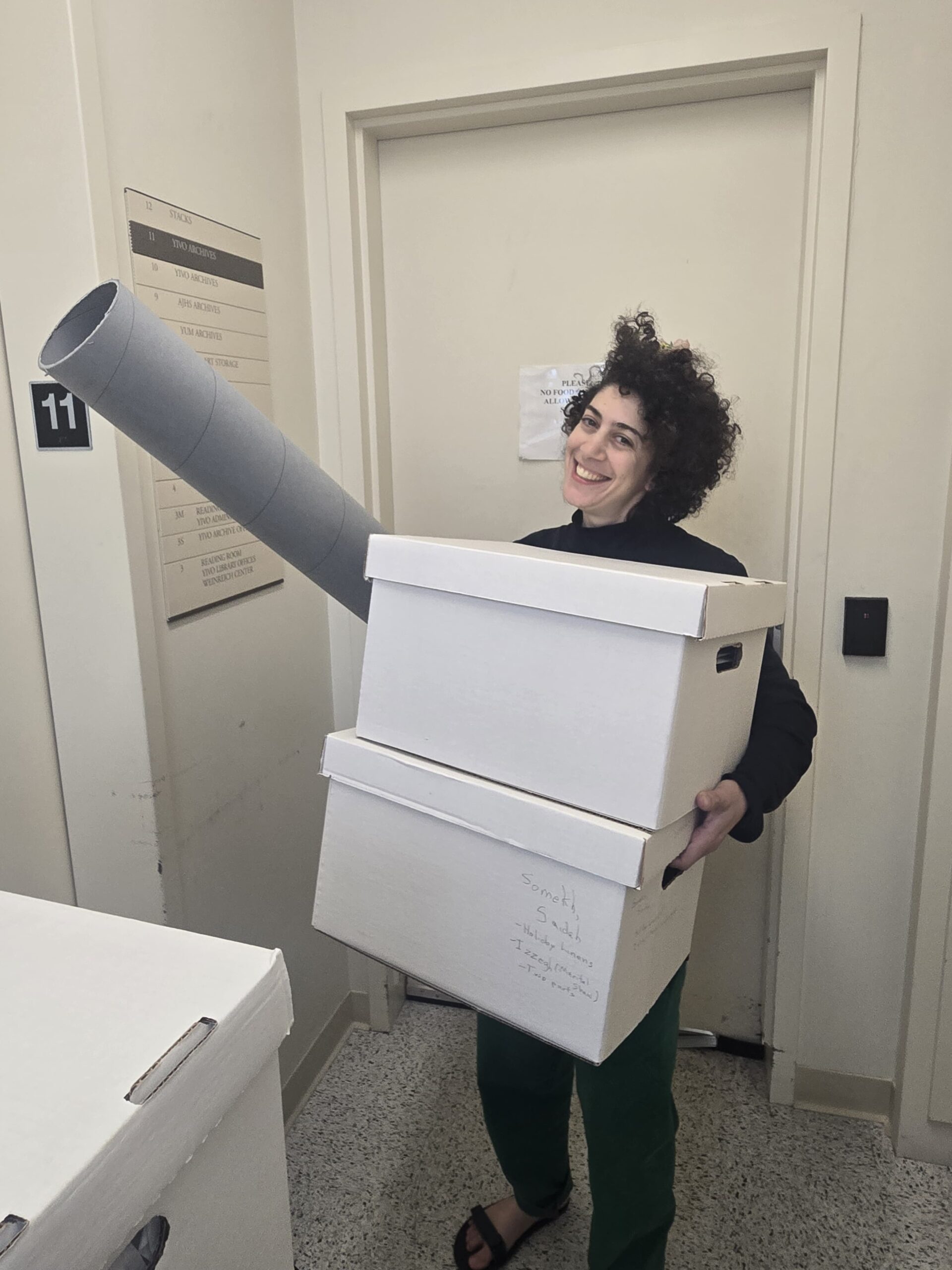
Like many incredible historical quests, uncovering the American Sephardi Federation’s marvelous embroidery and textile collection was a great coincidence. After overhearing a corridor conversation where I mentioned my research topic at one of Centro Primo Levi’s events, Natalia and Alessandro invited me to give a talk at the center. When preparing my talk, a quick visit to the ASF’s archives exposed a hidden treasure. We immediately understood that we had to catalog this collection and bring it to others’ attention.
Centro Primo Levi arranged a summer fellowship in conjunction with the CCNY/Mellon Foundation internship program, and, with the help of ASF, we began the cataloging and preservation project at the start of summer 2026.
Over two and a half months, the very talented interns Naila Hassan and Michael Fulgencio and I cataloged over 140 textiles from the ASF’s collection. Individuals and Jewish communities worldwide donated the items. The diverse embroidery, needlework, and weaving styles reflect the collection’s wide geographical and temporal spread. Items arrived from India, Turkey, Greece, and the USA, among others. Some items date to the 19th century, while others are more modern.
During the summer months, we located all relevant textile boxes in the collection. We documented each item, measured it, assessed its condition, and improved storage conditions to meet each textile’s needs. We wrapped some textiles in acid-free tissue paper and stored them in special textile storage boxes. Others were rolled on acid-free textile tubes [Image 1] to protect them and prevent further deterioration in their condition.
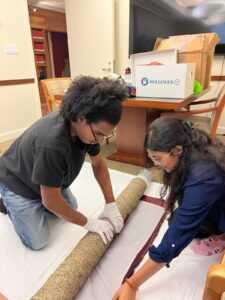
A big part of the magic of this collection is that most donated items were everyday objects used in different contexts.
Different textiles in the collection shed light on aspects of family and community histories and lives in ways that are usually not documented through textual evidence and accounts.
One of the most remarkable objects that reveal the traditions of a Ladino-speaking family is a “Matzah Mantel”, donated by Sam Camhi [Image 2] to the ASF in 2010.
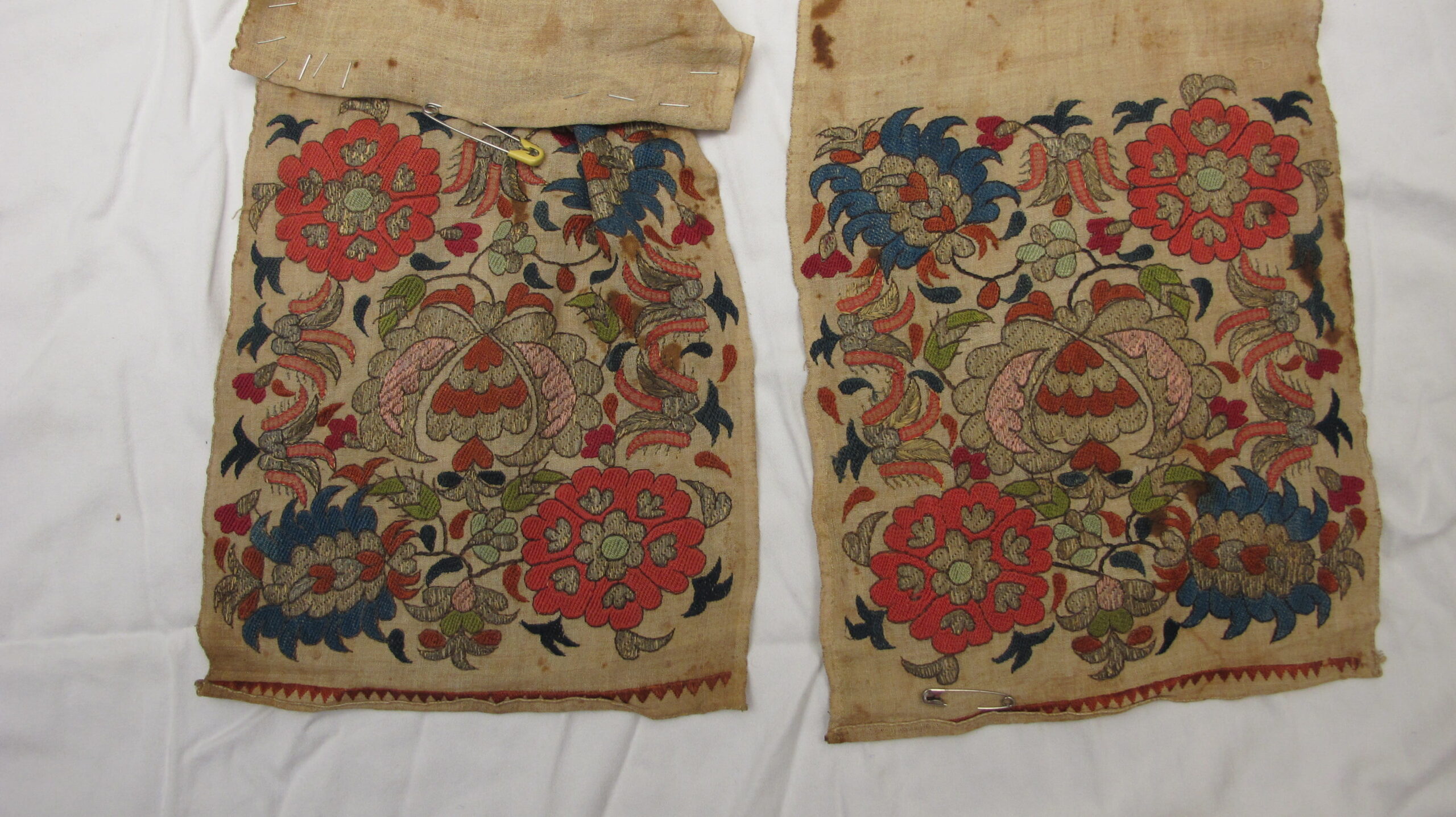
 The Mantel has marvelous Ottoman-style embroidery in red, blue, green, orange, pink, and black.
This style was common across the Ottoman Empire and reached as far as North Africa. The floral shapes are constructed from separate geometrical patterns made with “long and short stitch,” each surrounded by a black thread done in Holbein stitch.
When we found this piece, we noticed that at one end, the textile is folded and stapled together. This improvised pocket contained something hard, yet crumbly. Given the title this item was given, “Matzah Mantel,” we suspected it might contain a matzah but had a hard time believing it. The mantel was donated 16 years ago and may not have been in use for many years before it was donated. Can a Matzah survive so long?
Since the metal staples and safety pins were harming the fabric, we decided to remove them. We discussed how to keep this item in the shape it was received in while preventing it from deteriorating. Removing the metal pins was the first step in preventing more harm to the fabric.
We had to remove the pins slowly and carefully. We wanted to avoid harming the old fabric and maintain the shape of the fold, as the donor provided it [Image 3].
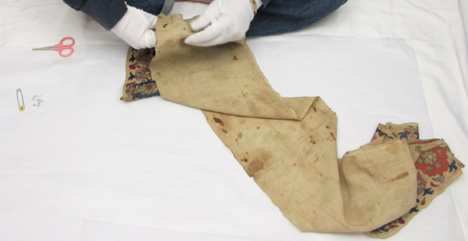
Once we removed the pins, we could also examine what was inside the fabric [Image 4].
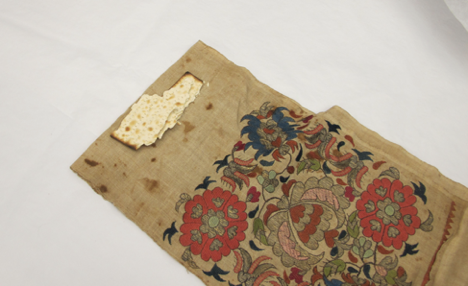
To our astonishment, we found a piece of matzah that looked as if it was made yesterday. Nothing happened to this matzah over the years. It was as if time froze.
Usually, textiles need to be separated from food so the latter doesn’t harm the textile. However, this Matzah Mantel tells a larger story: a history of a specific family, their customs, and traditions. It also tells the story of a Ladino-speaking community and its migration from around the Mediterranean to the USA. The testimony of Sam Camhi, the donor of this incredible piece of history, sheds more light on these customs and traditions. On August 28, 2010, Camhi recounted how his family used this mantel. Every Passover, a piece of matzah was placed in the lower part of the mantel and was circulated among the participants of the Seder. Each holder had to recite verses in Ladino, along with a Ladino song that everyone sang. From Camhi’s testimony, we also learn that this Mantel was passed down through the family for over 150 years.
To preserve this long and multi-layered history, we decided to wrap the Matzah well so it would not come in contact with the fabric, place it exactly as we found it, and sew the mantel back together the way we found it with natural cotton thread, in order not to harm the textile [Images 5-6].
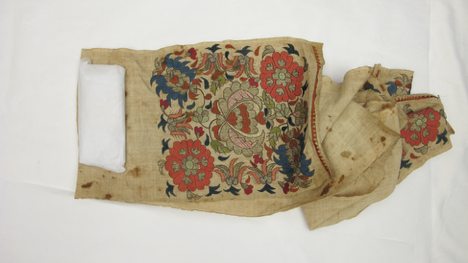
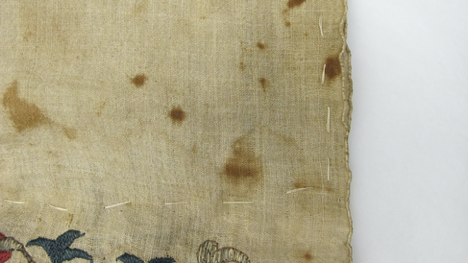
The Matzah Mantel tells one story among over 140, each represented in a different beautifully crafted textile. I invite you to continue exploring the collection with me and uncover stories of Jewish communities and families from around the world.
The catalog of the textiles we created will be added to the Center for Jewish History’s general catalog and published in hard copy by the Centro Primo Levi. Until then, I encourage you to read blog posts by Naila and Michael, who will continue working on the project and write about the items they found most intriguing.
Dive with us into the ageless world of textiles and the unspoken historical tales these everyday items tell.