
My time with Elya and Michael cataloging and archiving textiles that were donated to The American Sephardic Federation went nothing like I imagined. Elya’s specialty as a textile researcher is embroidery which is something that has always visually interested me but I knew nothing about. Before this I couldn’t identify the difference between fabrics much less stitch types, and couldn’t imagine that I would now be identifying these things on my own for the catalogue. I developed a keen interest in these textiles both with and without embroidery, and I wish to delve deeper into the stories behind them and how they ended up in our possession.
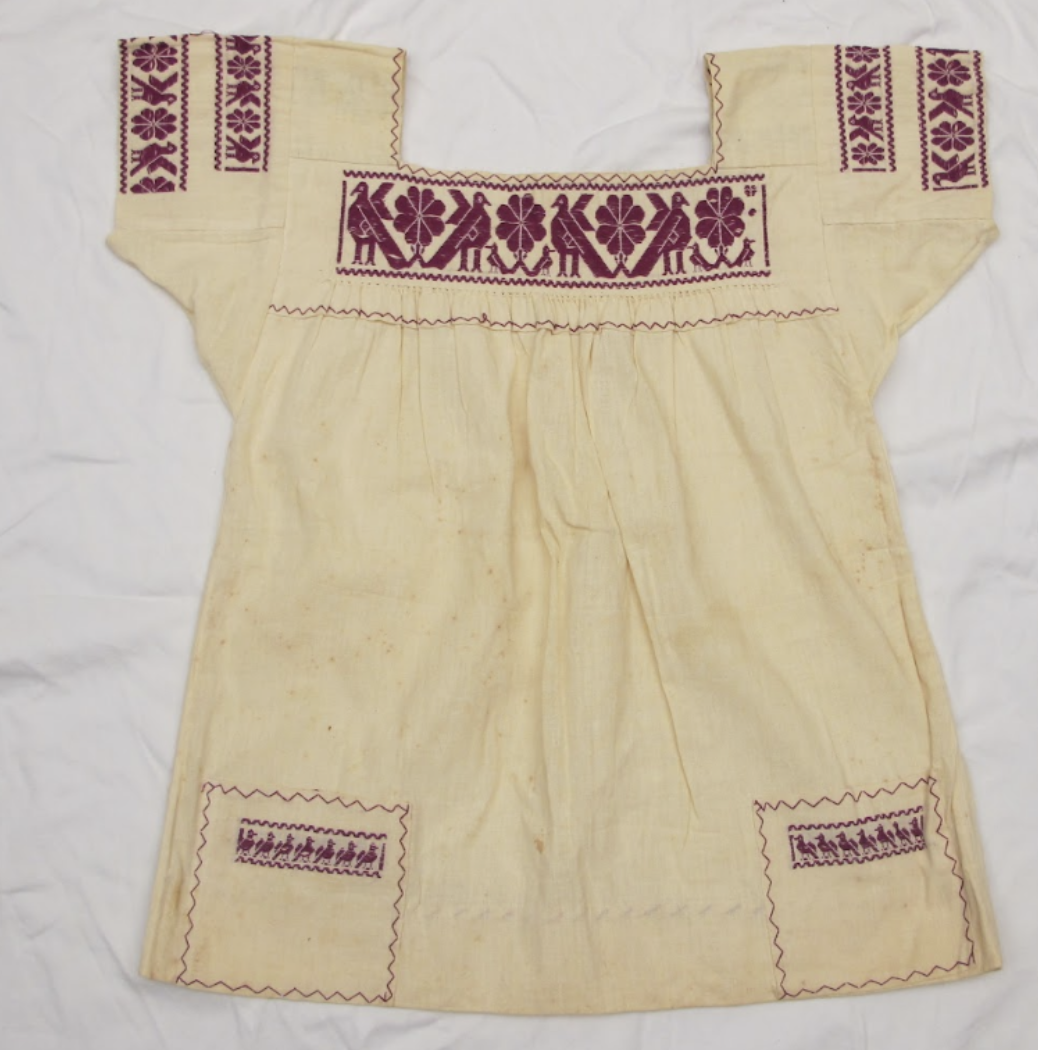
My favorite piece among everything we found was this beige dress/tunic with birds-and-flowers patterned embroidery. The beauty of this bordeaux patterning on the sleeves, pockets, and collar made me excited to look deeper into the history and analyze the composition. Through information given by the donor, Lenore Hazan Levy, we found out that the tunic was from Greece (specifically Castoria, Rhodes, or Salonika) and was reportedly used in the 1920s. The embroidery was a simple satin and running stitch but the back of the fabric revealed the level of the embroiderer as skilled due to the cleanness of the stitch. I love the craftsmanship of this piece and how even after all this time, it still holds up as something that can be worn for a long time. The sturdiness of the linen and the general style drew me in from the start, and it’s something I can see myself wearing today. We carefully packed the piece using tissue paper between the folds and stored it in an acid-free box so as to keep it from deteriorating. With these precautions, the next person who sees this tunic should be able to see it in the same beautiful condition as I did.