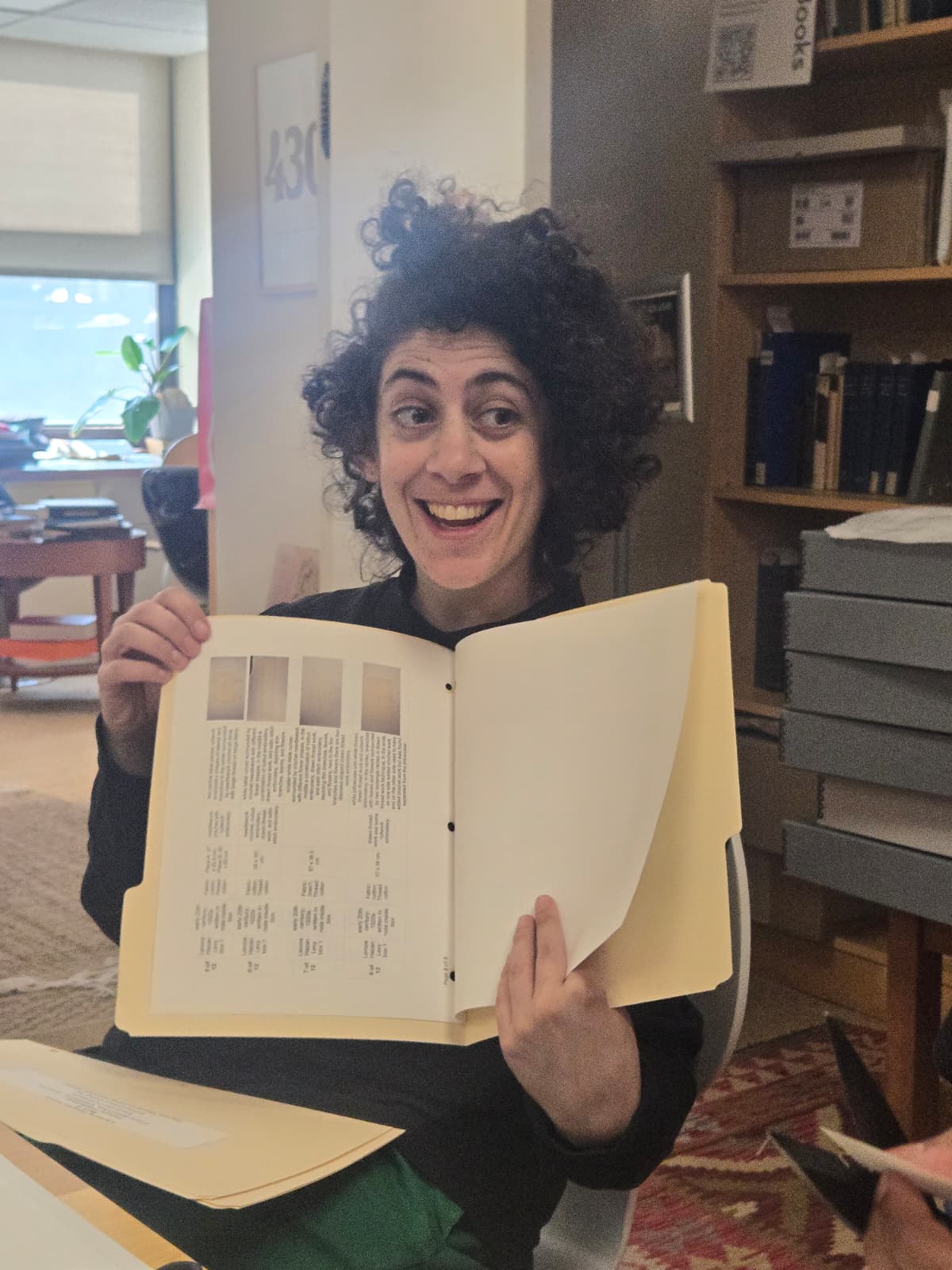
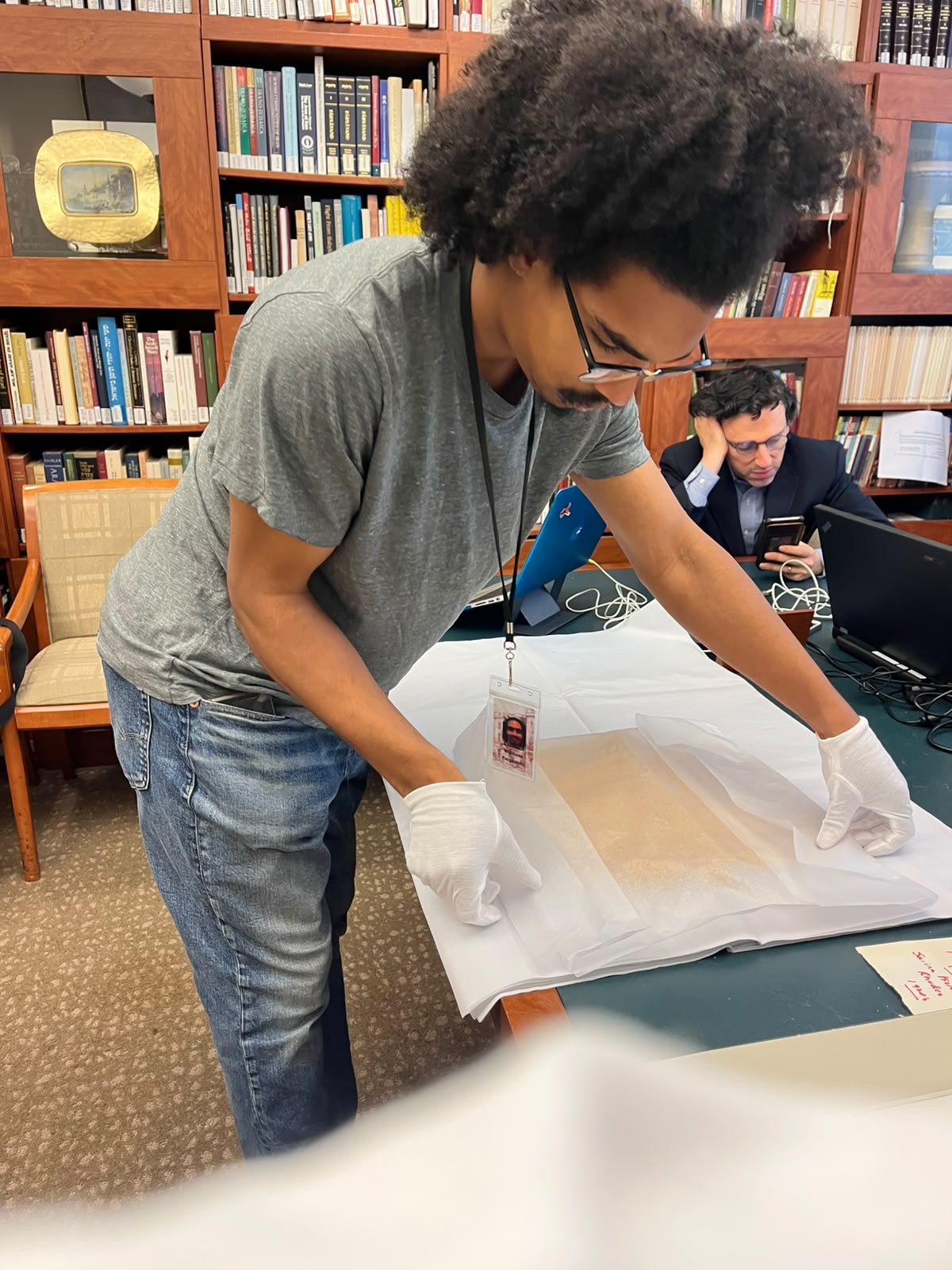
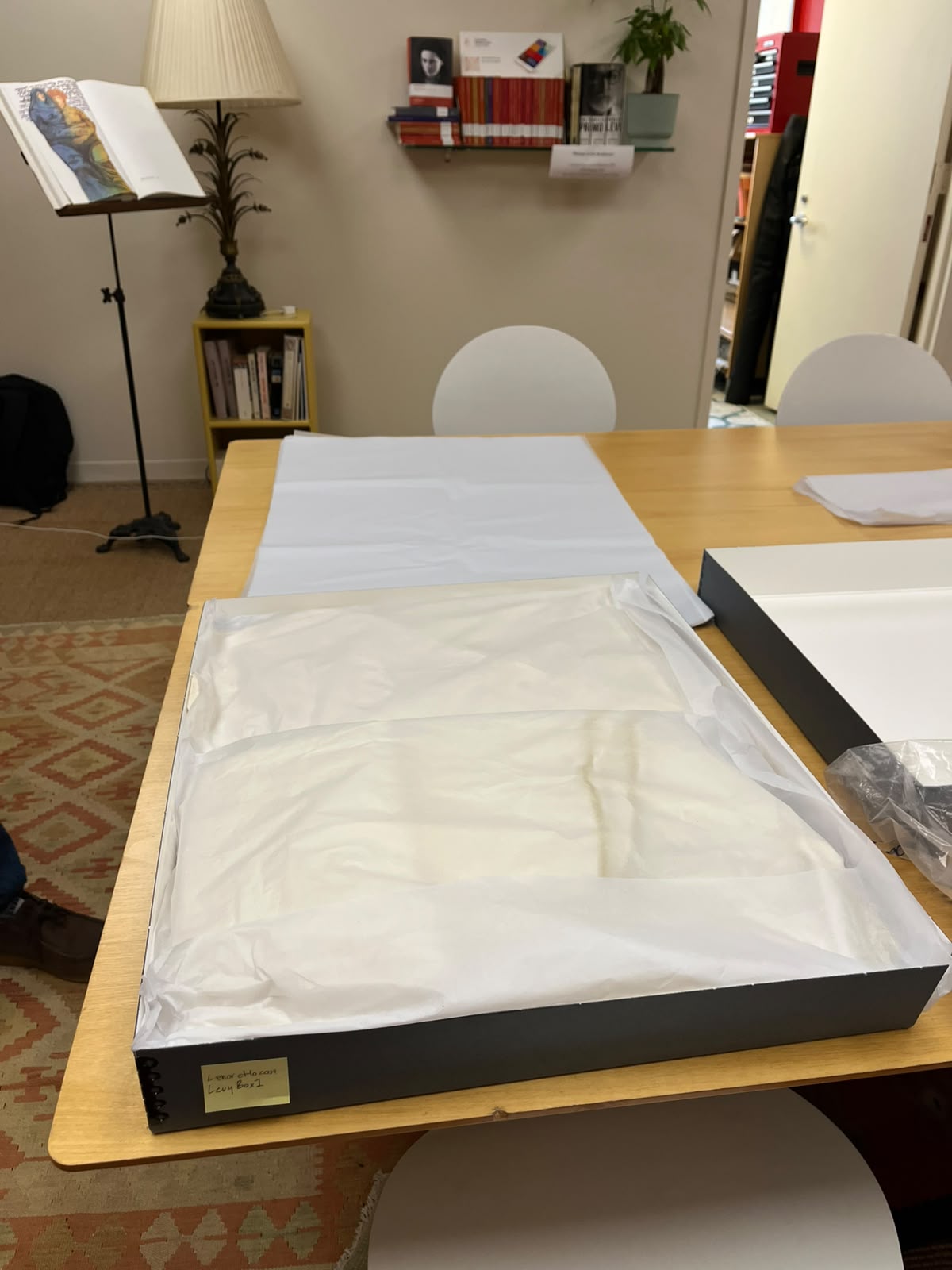
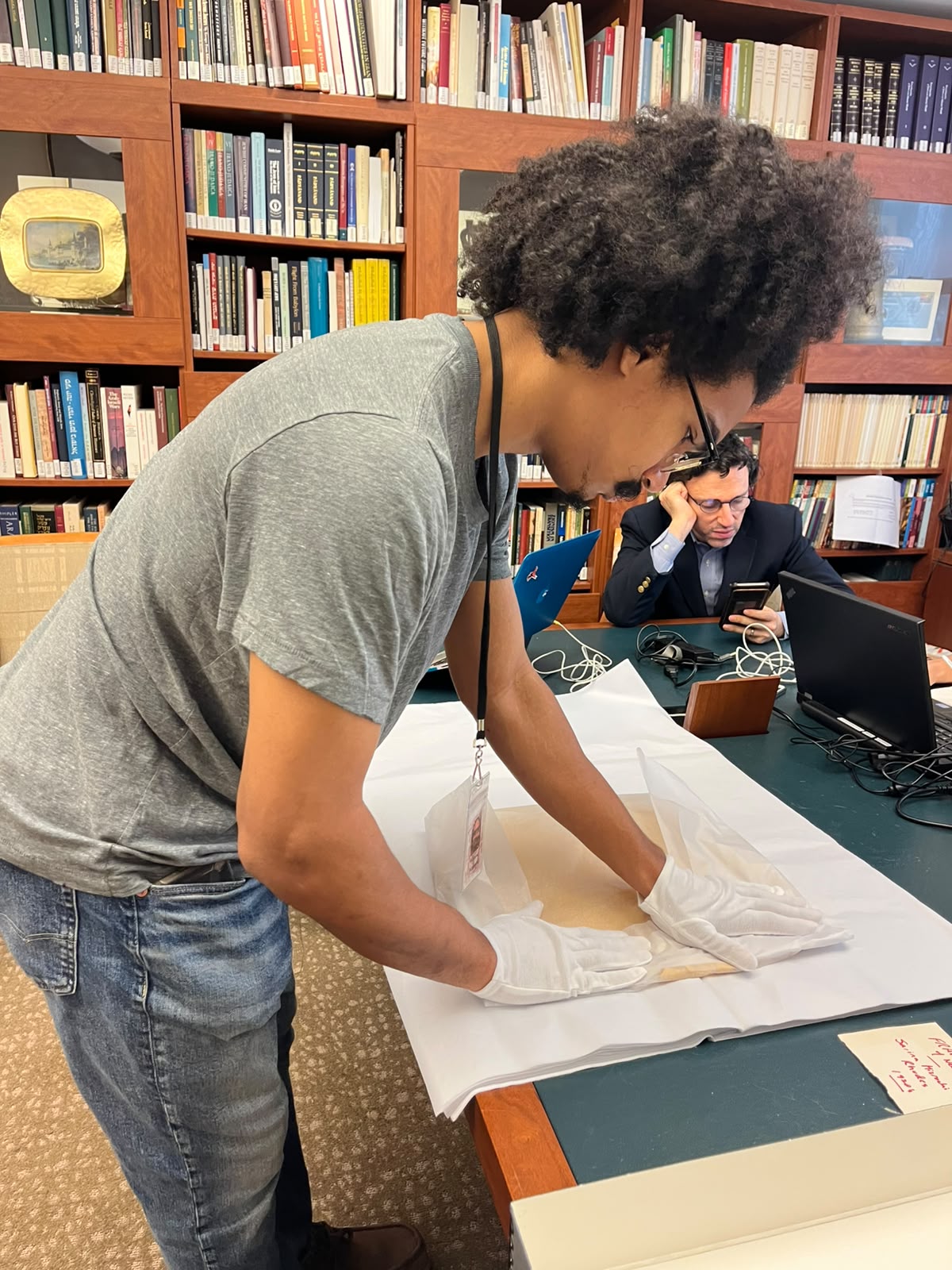
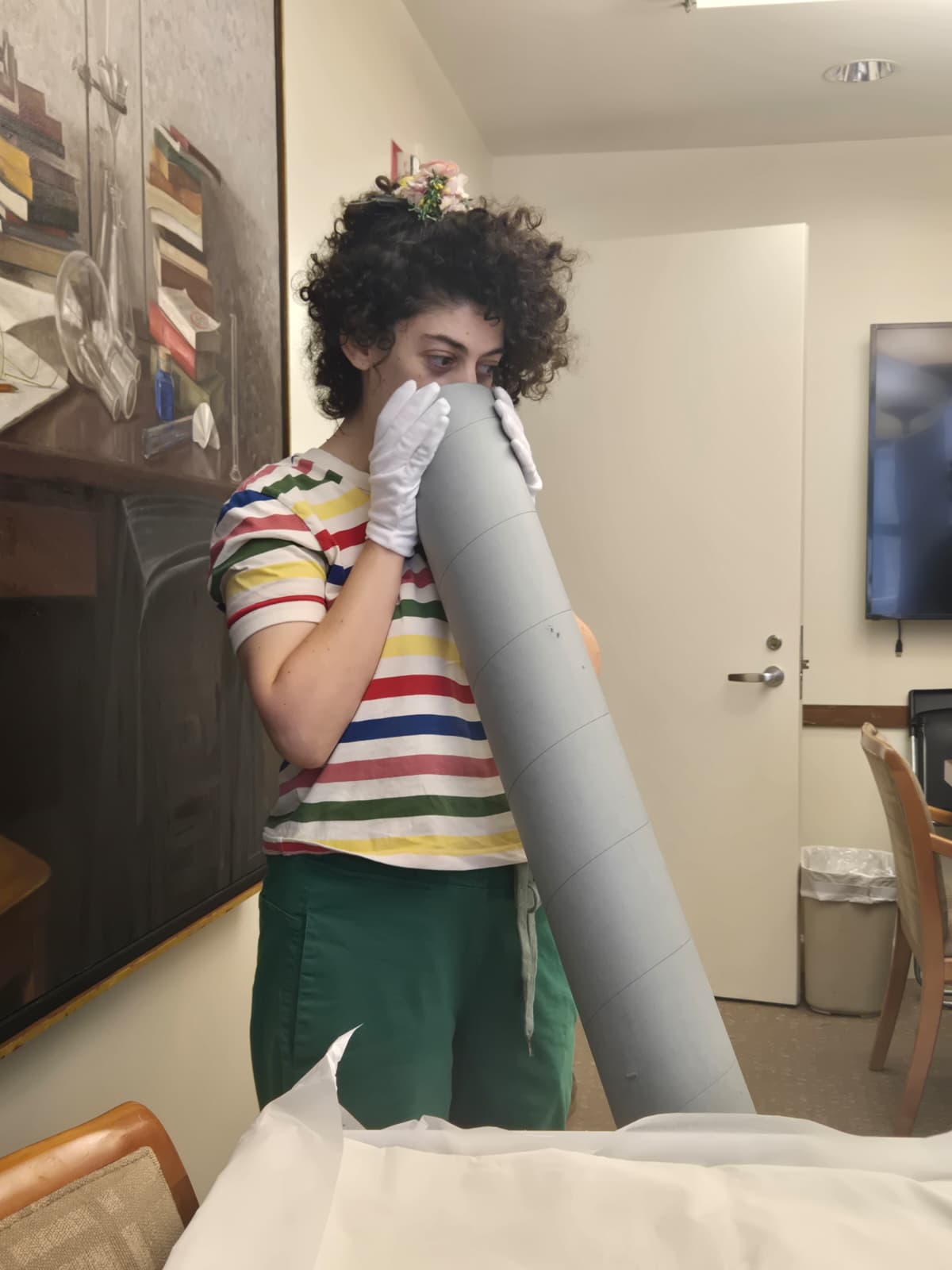
This summer, Elya Assayag has been a fellow at Bookhouse and produced a catalog of the American Sephardi Federation’s textile collection. She was assisted by and trained Michael Fulgencio, who interns at CPL from CCNY, and Naila Hassan, a former CCNY intern who is now activities coordinator.
We thank Elya for her wonderful work, her dedication to the students, and the beautiful catalog she has assembled. We look forward to continuing to work with her developing a map of textiles and embroideries from the former Ottoman Lands, Italy, the Iberian peninsula and beyond.
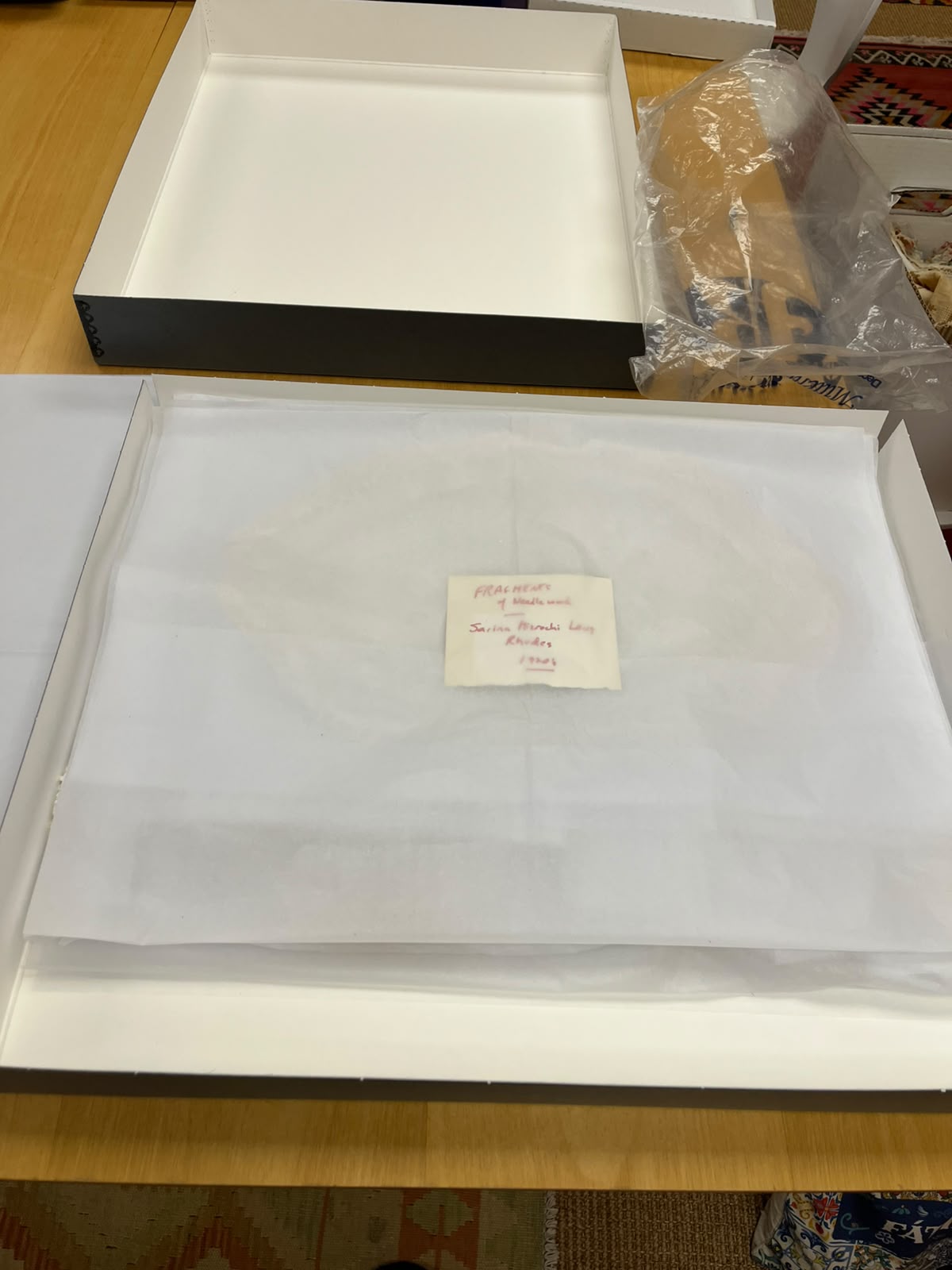
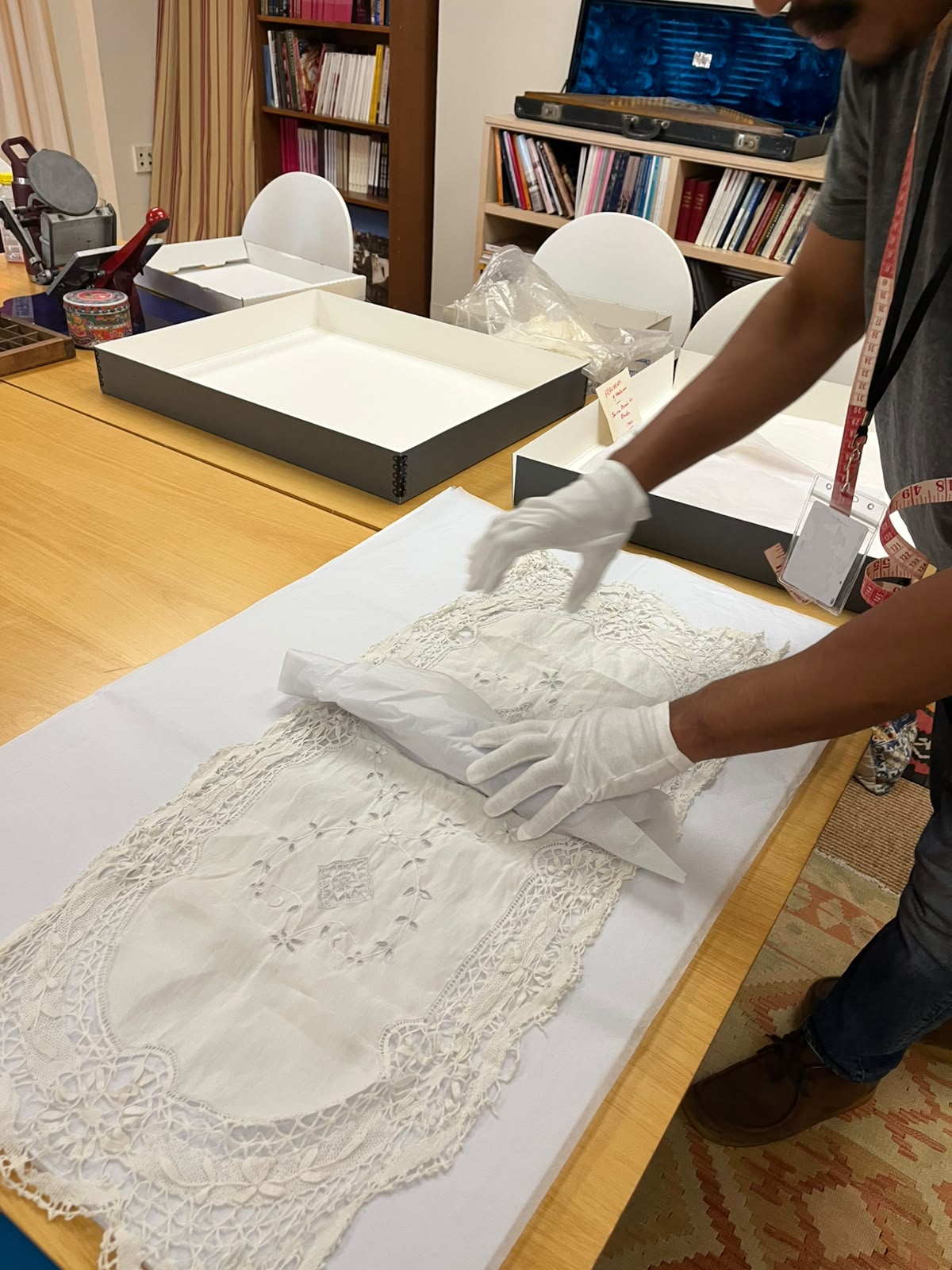
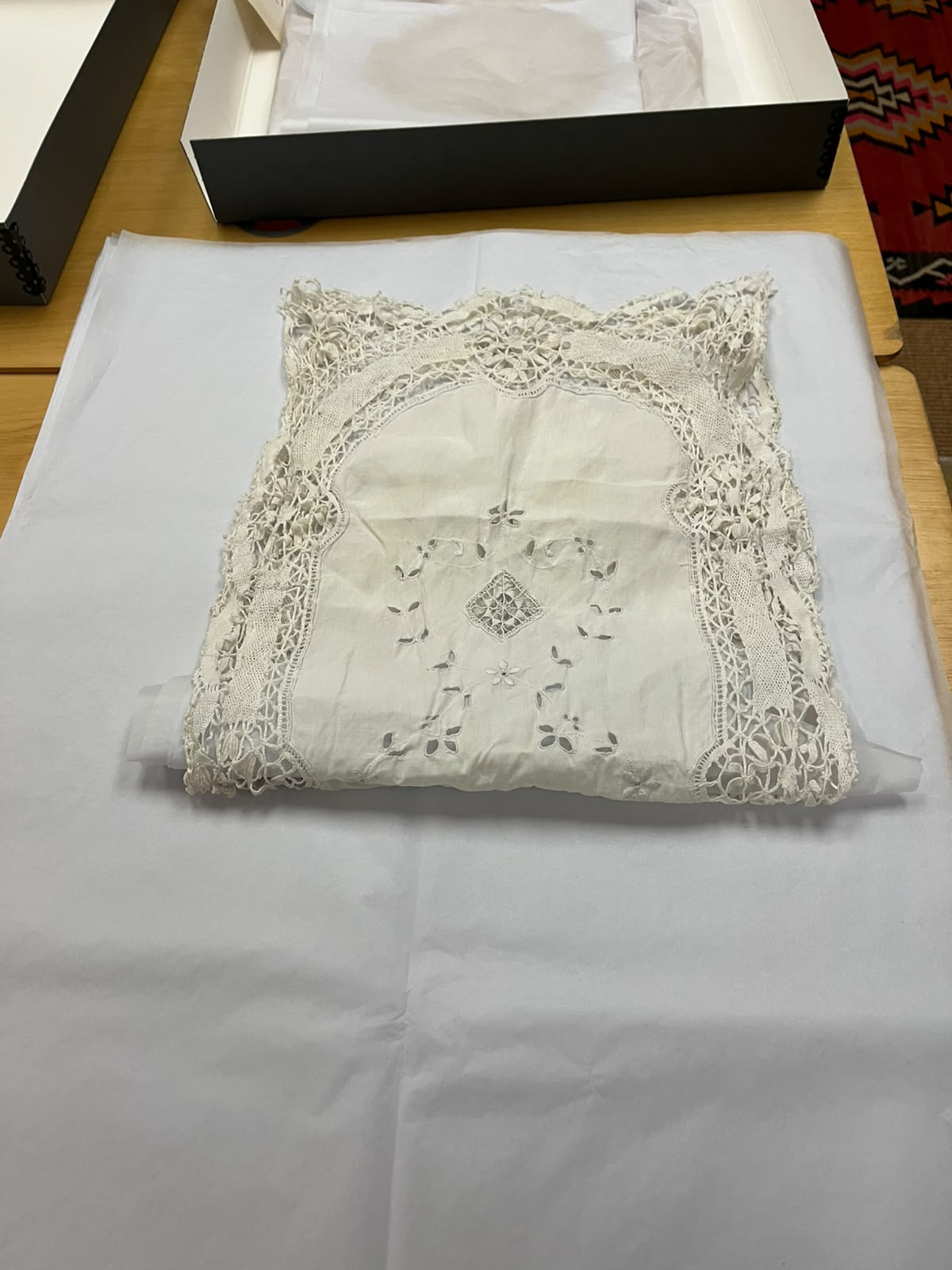
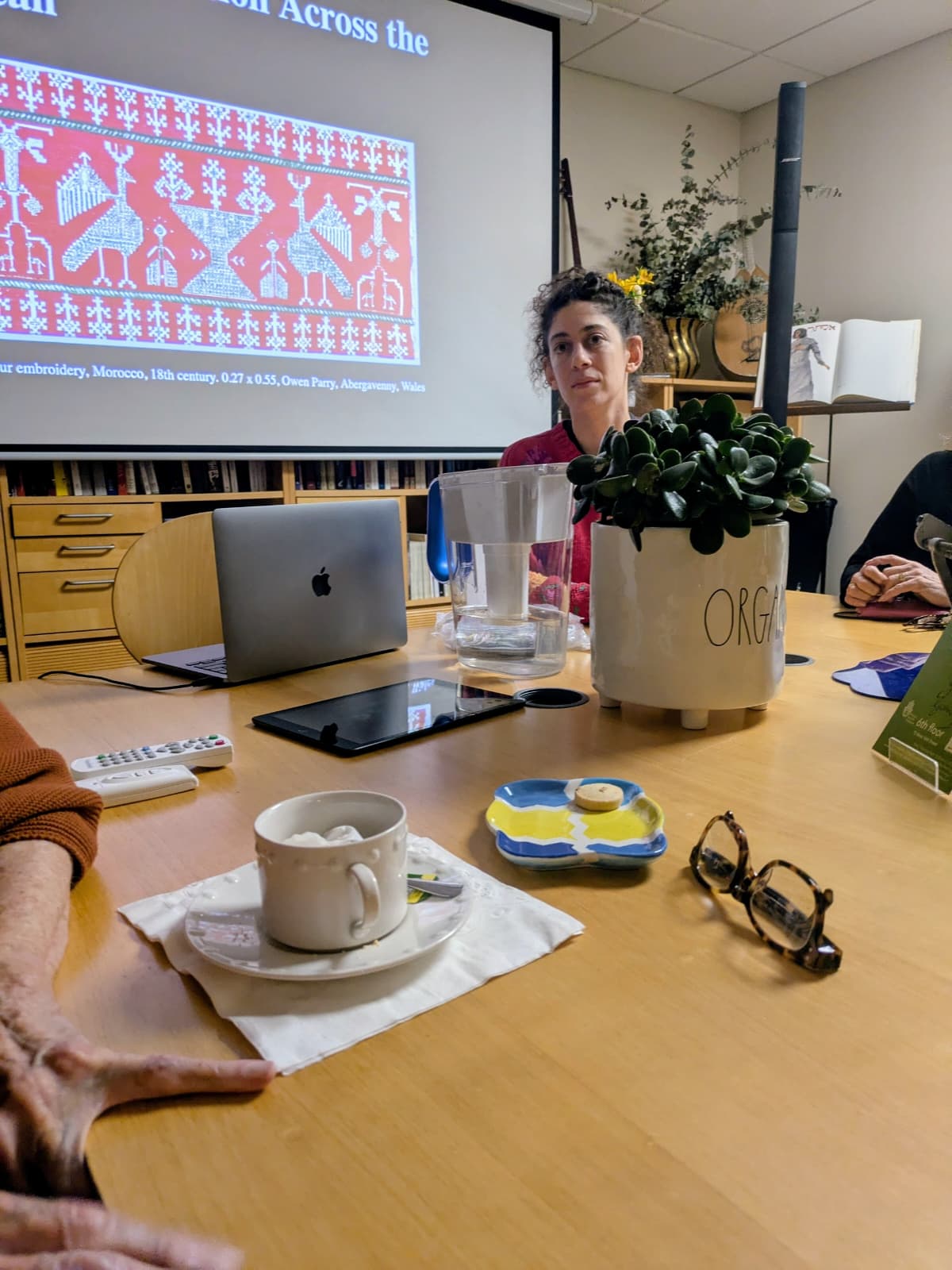
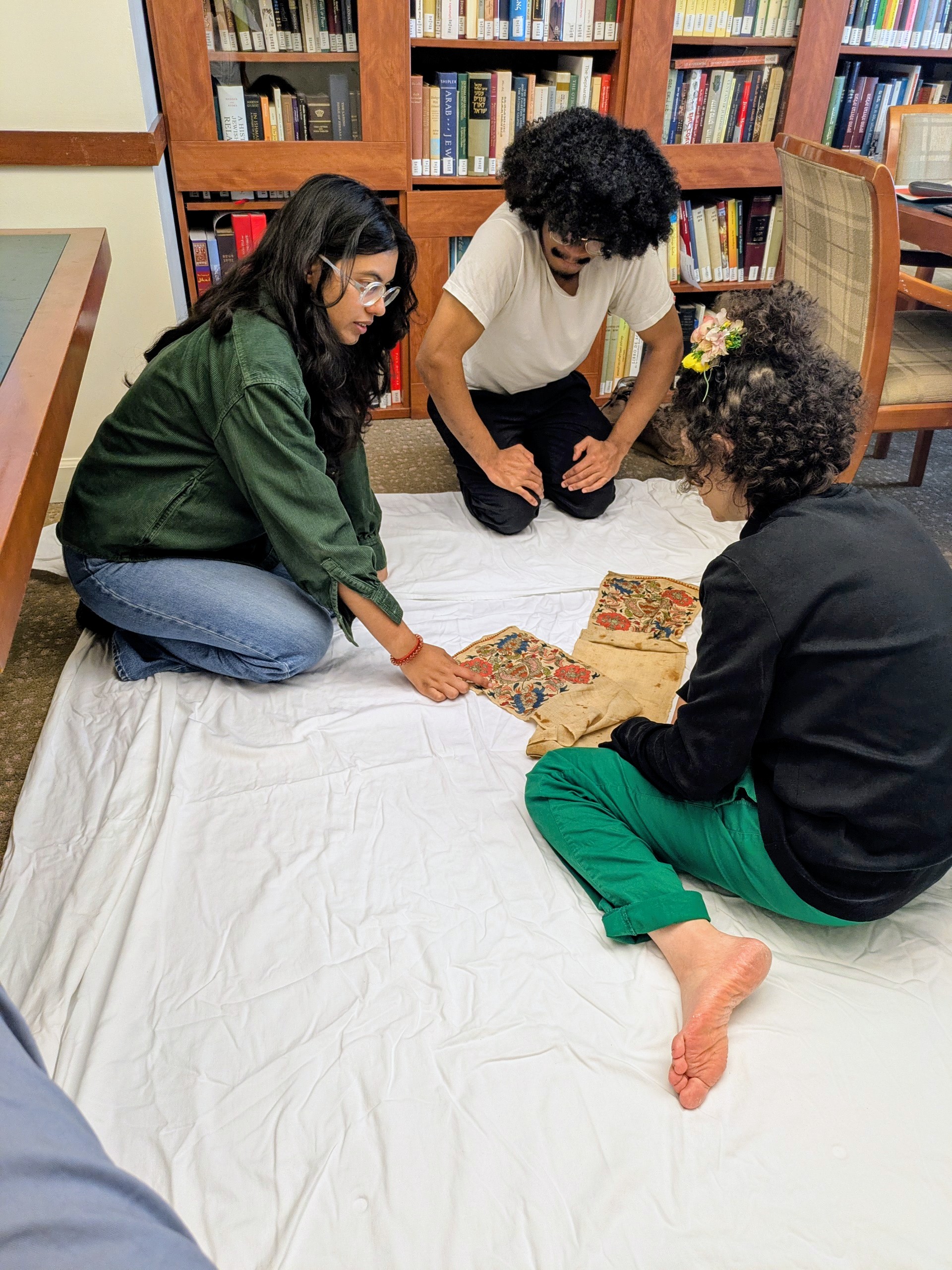
Elya Assayag studies the social and cultural history of women in Morocco during the nineteenth and twentieth centuries. Since written materials by and about women are scarce, she uses women-designated crafts as central sources for historical analysis. Her dissertation, “Embroidering Histories: Women, Craft, and Colonial Powers in Morocco,” centers on embroidery. As a nonverbal means of communication, embroidery provides a way to trace the histories of Muslim, Jewish, and European women in Morocco that are often absent from written archives. The dissertation explores how different powers operated within women’s spheres and reveals the circulation of knowledge and aesthetic trends within Morocco and between Morocco and Europe.
To “read” embroidery as a nonverbal means of communication, the study employs a combined, multidisciplinary methodology. In addition to archival research, private and public embroidery collections are analyzed using material analysis tools. These are combined with oral history interviews that are enriched by embroidering with the women to better understand the craft and its production.
Elya’s work has been supported by various institutions, including: the New York Public Library (NYPL) Diamonstein-Spielvogel Fellowship; the American Institute for Maghrib Studies (AIMS); Columbia Institute for the Study of Sexuality and Gender (ISSG); the European Research Council (ERC); the Foreign Language and Area Studies fellowship (FLAS); Columbia Institute of Israel and Jewish Studies (IIJS); the American Academy for Jewish Research (AAJR); and The Tauber Institute for the Study of European Jewry.