
Remembering Aldo Braibanti (1922–2014)
Event Details
Aldo Braibanti (1922–2014): anti-fascist, poet, Spinoza scholar, and artist.
Braibanti’s life and legacy will be explored through his retelling of Sophocles’ Philoctetes, evocative tales of centaurs and seers, and meditations on solitude in its many forms. The program concludes with a screening of Alessandro Cassin’s The Scandal of the Imagination, a 25-minute film about Braibanti.
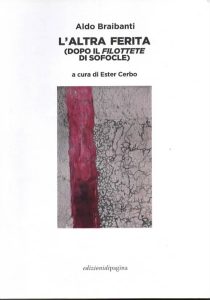
Cassin will reflect on his enduring friendship/collaboration with Aldo Braibanti, with special attention to Braibanti’s Philoctetes and the enduring relevance of this rarely staged Sophoclean tragedy—rooted in the theme of existential solitude. Writers such as André Gide, Heiner Müller, Seamus Heaney, and Derek Walcott have each reimagined Philoctetes in their own voice. Braibanti’s Philoctetes, L’altra ferita, was recently brought to light by Ester Cerbo.
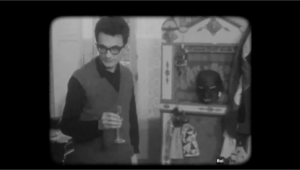
 The film explores intellectual and artistic freedom, individuality, and defiance against conformity. Visually audacious and musically bold, it is both a theatrical and political work—narrating a story of persistent resistance and creative innovation, centered on a man seeking to understand and challenge the society that excluded him.
Braibanti, a libertarian, atheist, and anti-fascist, fought as a partisan in the Italian Resistance. After the war, he returned to his intellectual passions, weaving art, science, and poetry together. In the early 1950s, he established Italy’s first post-war artist commune, which fell victim to a witch hunt that resulted in his arrest. As Italian society changed, neo-fascists targeted him for his beliefs, resistance legacy, and sexuality.
He drew national and international attention in 1968, when he was prosecuted and sentenced to nine years in prison for plagio—”plagiarism of the mind,” or psychological subjugation—a medieval charge revived under fascist law. Braibanti was accused of “enslaving the mind of another man for his evil purposes.”
The trial preparations lasted four years and became a public spectacle. The prosecutor cross-examined many witnesses, trying to demonize Braibanti’s life. Braibanti was sentenced to nine years, later reduced to four. Italy’s leading left-wing intellectuals, such as Umberto Eco and Pier Paolo Pasolini, attended his trial and wrote about it. The case became a symbol of the deep conflicts hidden beneath post-war Italy’s political and cultural compromises.
Before and after his imprisonment, Braibanti settled in Rome, where he conducted groundbreaking artistic projects out of the media spotlight and collaborated with figures such as Carmelo Bene, The Living Theater, Maria Monti, Heinz-Klaus Metzger, and John Cage.
The film invites viewers to revisit Braibanti’s extraordinary body of work and its central themes—the pursuit of personal and collective freedom, the transformative power of art, and the value of dissent. His poetry, plays, collages and assemblages, theater & film experiments, and philosophical investigations are presented as fragments of his deeply original worldview.
From an interview with Alessandro Cassin:
What is the relevance of Aldo Braibanti’s story, and why tell it through an art documentary?
Aldo Braibanti’s life and trajectory are a stunning example of the power of ideas. Against all odds, both under a dictatorship and later under the bigotry of an imperfect democracy, he stood his ground, finding ways, often at the margins of society, to carry on his work as a free man. He refused to compromise, even with people who nominally identified with struggles, resisting the temptation and flattery of becoming an instrument for someone else’s agenda. His uncompromising independence is an example of perseverance and integrity.
I chose to make a documentary because of his interest and love for the moving image.
The film documents your dialogue with Braibanti, as well as his dialogue with several collaborators and inspirational figures.
Collaborations were one of the backbones of his work. In addressing my collaboration with Braibanti, I established a fruitful—almost ideal—collaboration with Awen Films (Valerio Ciriaci and Isaak Liptzin), the creative team that allowed me to realize it.
More broadly, reflecting on Braibanti, I seek to illustrate collaboration. In a world where communication among political, social, and individual groups has grown tense and challenging, I find comfort in how artists and others in creative fields can readily connect with like-minded people across great distances and through time.
When I conceived this film, I wanted to include references to Aldo’s intellectual engagement with Spinoza—a discourse that accompanied him throughout his adult life and shaped his thinking. Few people read Spinoza today, but I hope this film can, in some small way, showcase the philosopher’s profound insights and his influence on Braibanti.
Aldo Braibanti was both a philosopher and a poet.
As I watch the film again, I imagine another possible connection, reaching even further back in time: a dialogue between Aldo and the ancient Roman poet, Ovid. When Augustus exiled Ovid from Rome in 8 AD, Ovid was considered the greatest living poet. He openly expressed his impatience with the Emperor’s moral restrictions and frequently denounced the imperial court’s backward resistance to modernity.
So they sent him where they thought he could do no harm: to Tomis (today Romania) on the Black Sea coast.
Ovid never returned to Rome. Today, he stands as a paradigm of the intellectual victim of power—his thirst for freedom paid off. Centuries later, he is the most widely read and beloved ancient poet in the Western world.
Two facets of Ovid resonate with Aldo Braibanti’s work and life.
The first aspect concerns humanity’s place on the planet. In “The Metamorphoses,” Ovid offers a planetary ecological perspective similar to Aldo’s ultimate vision. Ovid sees “the environment” as the space of relationships between species. He anticipates what biologists, sociobiologists, and zoologists strongly argue today. For example, even single-celled organisms have communicative capacity: yeast cells signal to each other, helping each other find other cells for reproduction. Trees communicate with each other through their roots (and other complex systems) and can remember and learn.
In Ovid’s works, the encounter with “the other” should be understood as an encounter with “other living beings” in a broad sense. Like Aldo with ants and social insects, Ovid believed that observing other forms of life is informative, fascinating, a formidable source of poetry, and, above all, the key to coexistence between humans and different species.
The second aspect concerns the distinct perspectives of Ovid and Aldo, two outsiders in different ways: one exiled to the Black Sea, the other in his “den” in the heart of Rome. Yet both remain unmistakably and defiantly engaged in understanding and commenting on the world that has cast them out. Their gaze is sharp and urgent—that of a militant observer looking at the center from the periphery of the empire.
You met Braibanti in the early 1980s. Why did you wait so long to tell his story?
In the Talmud, there is a saying: “One does not come to one’s teacher’s wisdom until the passing of 40”.