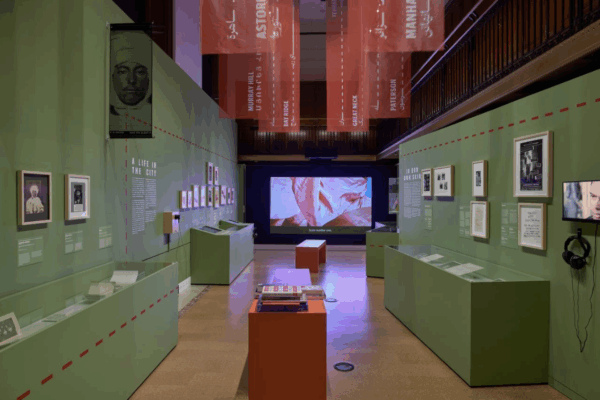
It’s a joy to see BOOKHOUSE grow and transform thanks to the initiative and projects of our interns.
Over the past several months, our interns from CCNY, spearheaded by Shirley Rafael and Josemiluis Peralta, have been diligently organizing, cataloguing, and placing several book collections belonging to the American Sephardi Federation in the stacks. This project has been carried out in close collaboration with the American Jewish Historical Society, demonstrating the spirit of teamwork that drives BOOKHOUSE forward.
While working on the ASF stacks, we have found a few “forgotten treasures” we want to share with our visitors at BOOKHOUSE.
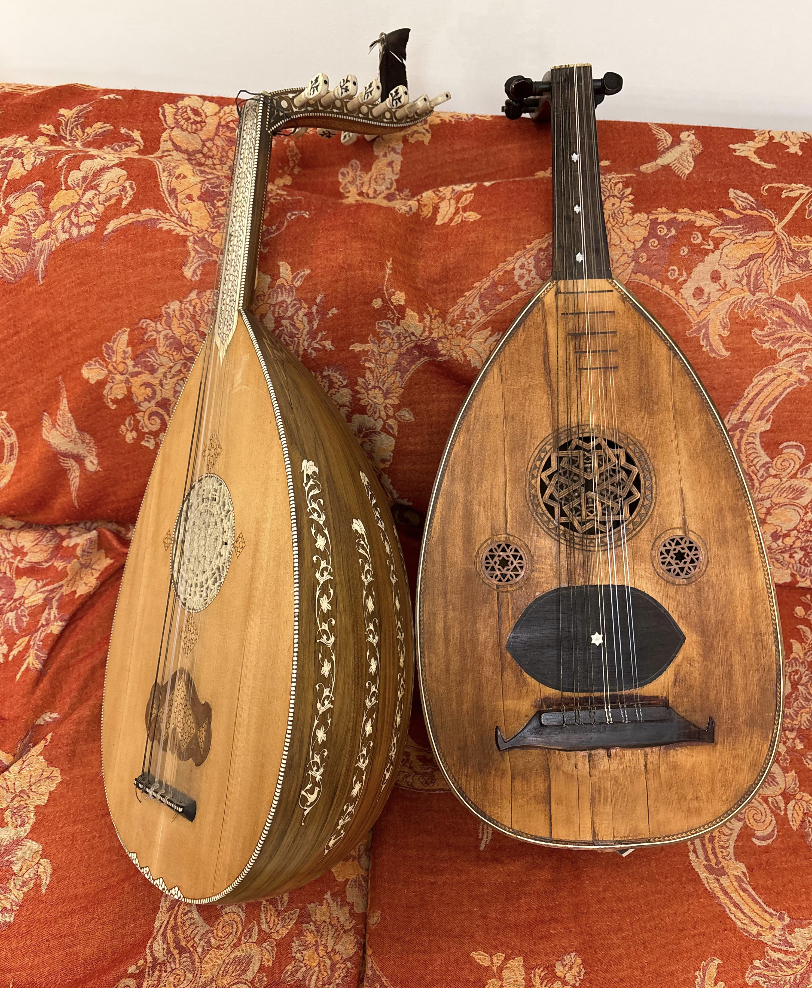
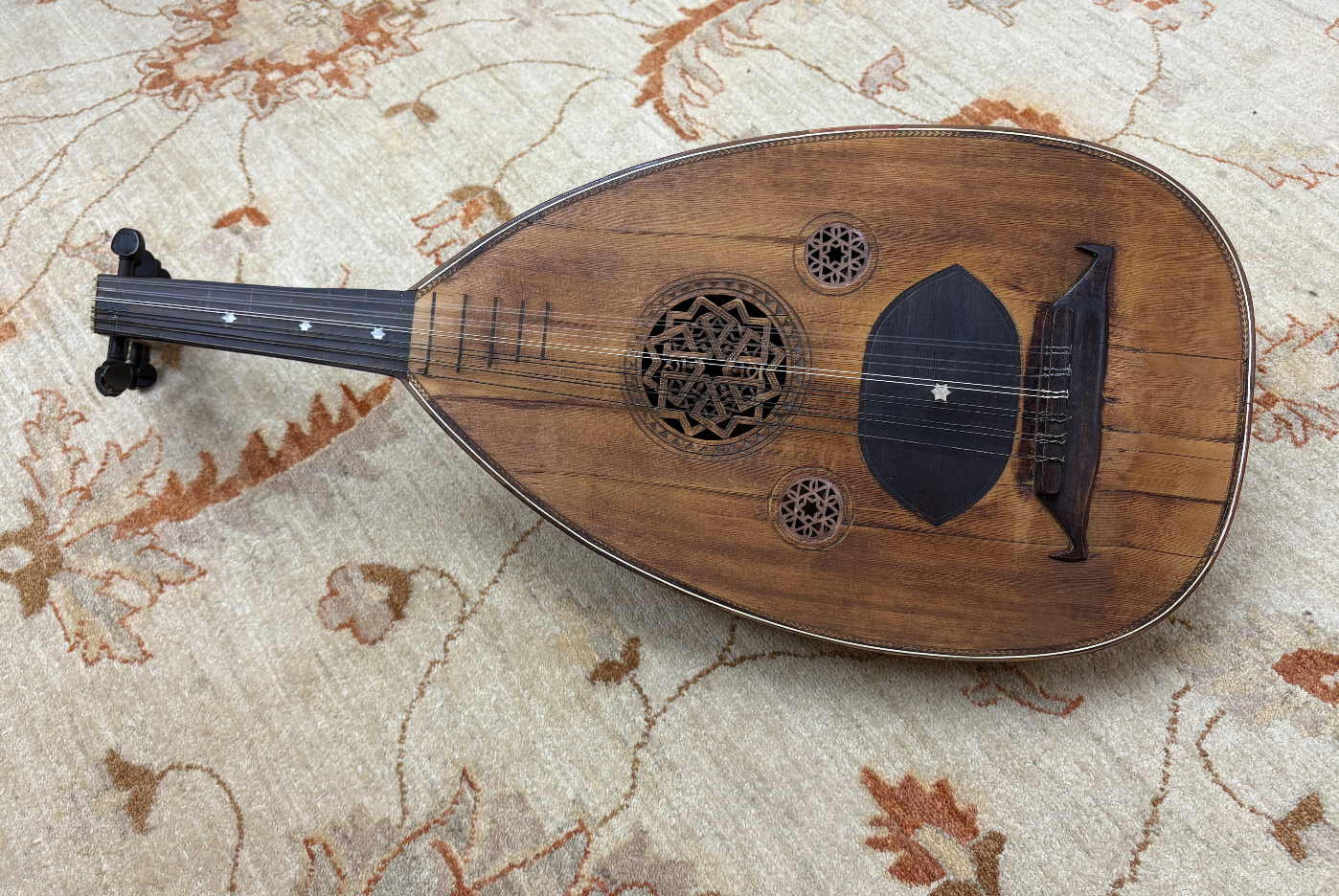 One such treasure is a pair of beautiful ouds. The oud is a short-necked, fretless string instrument with a pear shape. It is similar to a lute; in fact, the Western lute derives from the Medieval Islamic oud. These gorgeous instruments evoke the common origin of much of Sephardic, Arabic, Ottoman, and Persian musical traditions, reminding us of music’s place in those societies. Our ouds are more than decor; one is already playable, and we plan to restore the second. Stay tuned for upcoming in-house concerts.
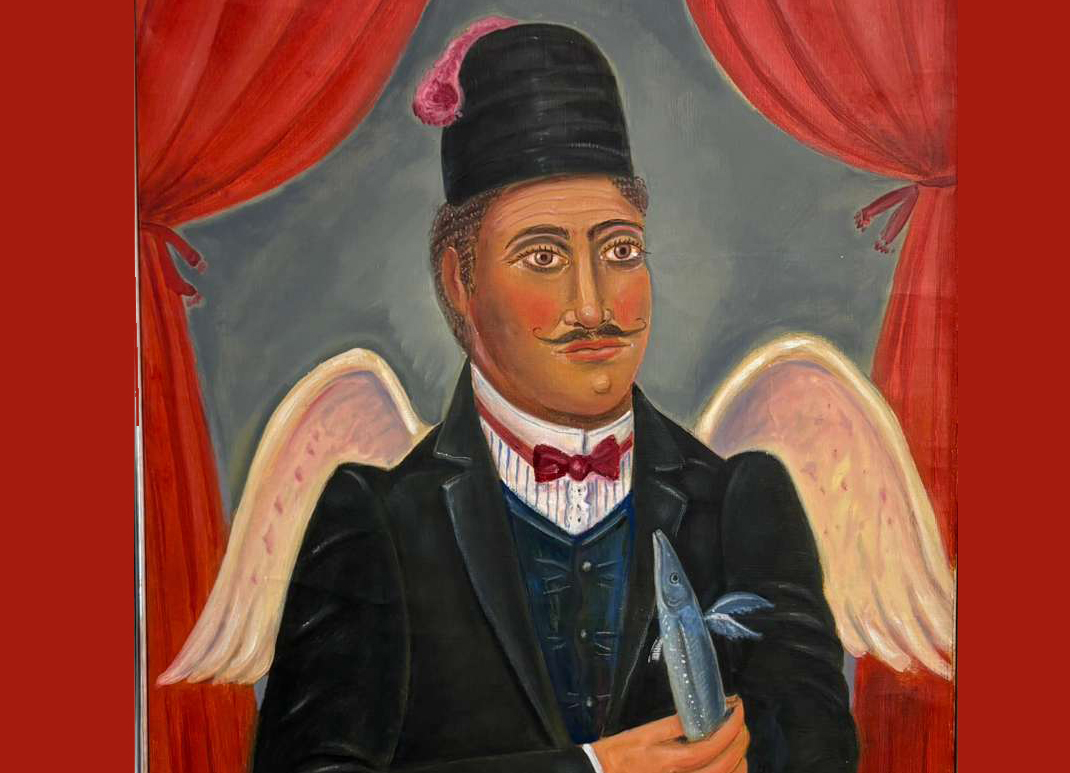
Another discovery from the same stacks is a painting with a lighthearted, dreamy, and quasi-surreal flair—perhaps best described today as “outsider art.” Gazing at it, I can almost hear a distant drum roll as the theater curtain opens to reveal a man in a fez, bow tie, and tuxedo, holding a giant sardine (or is it mackerel?) in his right hand. The artist hints at irony with the smile beneath his handlebar mustaches, while the man’s undersized wings nod to the connection between the human and the divine. Despite the seemingly mismatched elements, he appears to me as a fanciful, loving dream of an Ottoman man.
The headgear is shaped like a fez, but black rather than the traditional red, with a pink tassel rather than a red one. There are various theories on the origin of the fez (or tarboosh), but the one I want to believe points to Morocco and the city of Fez, where the felt of this hat was dyed with crimson berries. From Morocco, it reached Ottoman lands, where Sultan Mahmud II mandated its use as a headdress for his army, with widespread civilian use soon to follow throughout the Empire.
 Sardines are humble, unassuming yet delicious, omega-3-rich silvery fish with an array of symbolic meanings across cultures. Most often, they symbolize abundance, fertility, and good health. In Greek mythology, sardines were associated with the sea god Poseidon. Fishermen would offer sardines as a sacrifice to Poseidon to ensure safe and bountiful fishing expeditions. According to Portuguese folklore, sardines bring luck and prosperity to those who respect the sea. One legend tells of a poor fisherman who, after finding a large school of sardines, became wealthy and always gave thanks to the sea for his fortune. In spiritual contexts, sardines symbolize abundance and community. Their habit of swimming in large schools signifies unity, cooperation, and the strength that comes with numbers. Sardines point to the importance of working together and supporting one another. They are found worldwide in temperate and subtropical coastal waters, from the Mediterranean to the Atlantic, Pacific, and Indian oceans. Like humans, they often move seasonally, and sometimes migrate permanently in schools.
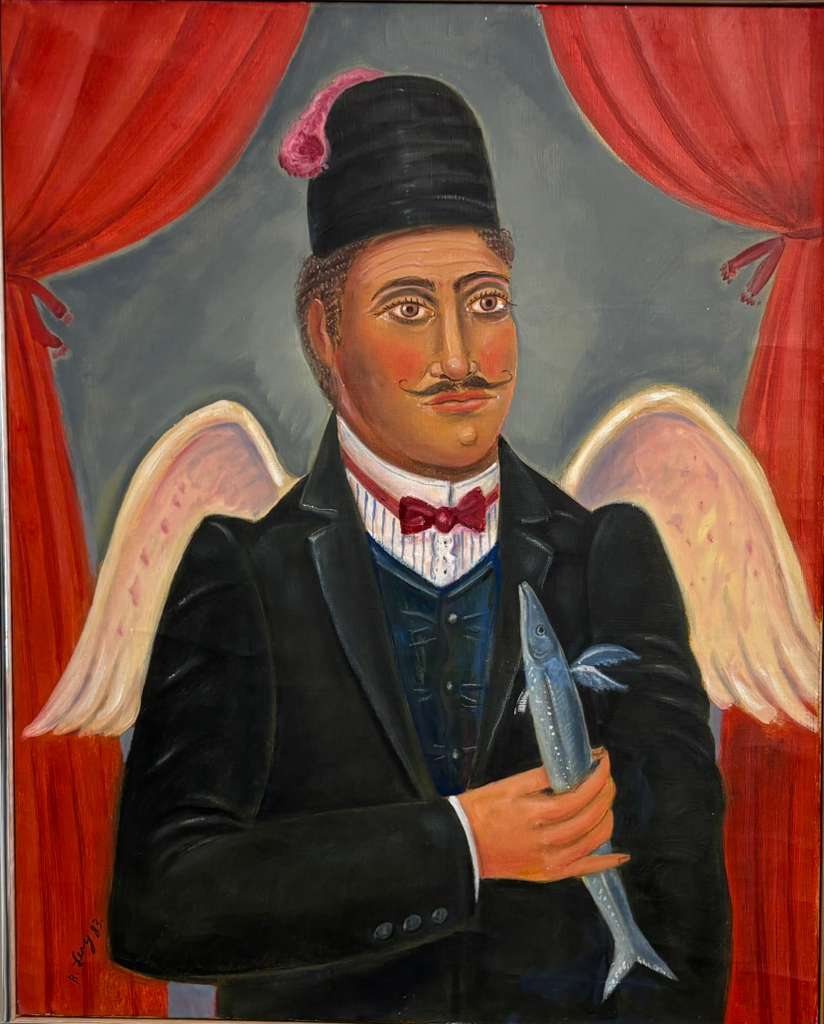 Though we could not locate the donor of this painting, I identified the artist: Benjamin Levy (1940-2020), who spent his life between Israel and New York City. He grew up in the Yemenite quarter of Tel Aviv. His father walked from Yemen to Palestine in 1906, while his mother was born into a Sephardi family in the Old City of Jerusalem. Levy grew up with 10 siblings in a very colorful neighborhood of immigrants. He was self-taught and paid little attention to conventions or trends. Growing up with dyslexia, he found unique ways to express himself, including developing his own artistic language, between dream and reality. His work has been shown in galleries and museums internationally.
A warm welcome, in spirit, to Benjamin Levy at BOOKHOUSE!
Bookhouse is open to the public on Thursdays between 10 am and 5 pm or by appointment. Come browse the Bookstore and Dan Wyman’s Antiquarian inventory. Check out our program calendar or stop by for delicious tea and coffee. Photos by Quinn Kinsella.