The Ottoman Empire existed from 1299 to 1922. Over the course of six centuries, it spread across Europe, Asia, and Africa. Its history is particularly connected to Central Asia, the Caucasus, the Balkans, the Middle East, and North Africa. It spanned what we commonly understand as the Middle Ages, the Modern Age, and the Contemporary Age. And in its final phase, the Ottoman Empire signed a Treaty of Friendship, Commerce, and Navigation with Brazil (1858), and thousands of its subjects immigrated to what was then an empire in the tropics, either seeking to “make it in America” or to rebuild their lives after wars and massacres.
In spite of its historical importance, the Ottoman Empire has received relatively circumscribed attention in Brazilian academia. A quick search on the Scielo Brasil platform indicates there are only four articles on the subject, such as Teresa Maria Malatian’s research (2023) on how the massacres committed by Ottomans against Armenians at the end of the 19th century were presented in the Fanfulla periodical, published by Italian immigrants in São Paulo, and Leonardo Francisco Soares’s text on the “crumbling of the Ottoman Empire” (Soares, 2012, p. 168), more specifically the conflicts in the Balkans, in the chronicles of Machado de Assis. On the Lattes Platform, a search for “Ottoman Empire” yields 106 results. The vast majority are undergraduate research projects on topics such as sexuality in the Ottoman Empire, military matters, minorities (especially Armenians), relations between the Ottoman Empire and Europe (especially Portugal), and the importance of understanding the contemporary Middle East through the lens of its collapse.
My own doctoral research on Brazil’s relations with the Ottoman Empire between 1850 and 1919 appears in search 1, as do courses I have taught within the Middle East Studies and Research Group, GEPOM. Along with Paulo Daniel Farah (2008), Paulo Gabriel Hilu da Rocha Pinto (2010), and Heitor Loureiro (2016), I consider myself among the pioneers of Ottoman studies in Brazil, being the first Brazilian woman to study and research the subject in Turkey.² For years, together with Heitor Loureiro, I have made an effort to teach Ottoman history to the general public and to disseminate it through participation in popular podcasts, such as, specifically, Xadrez Verbal³ and História FM⁴. The idea in this article, then, is to systematize why I consider it essential to study the History of the Ottoman Empire from a Brazilian perspective.
This text is based on classic books and articles of Ottoman history, on episodes of the Ottoman History Podcast⁵, and on joint reflection with students from the course “Lesser-Known Minorities of the Ottoman Empire,” which I taught in the graduate program at the University of São Paulo in the second semester of 2024, in addition to more than fifteen years of research on the subject.
Before attempting to form some possible answers and recommendations about why it is important to study the history of the Ottoman Empire from a Brazilian perspective, as proposed in the title, I thought it important to first, at a minimum, present the general milestones of Ottoman history, as it is taught and researched in the main centers for the study of the subject in the world. Afterward, we proceed to a brief presentation of the academic debates in Ottoman historiography, whether about periodization, concepts, methodology, and sources. We then arrive at Brazilian academia, which still remains conspicuously silent about Ottoman history or often sees it as “Arab history” or “history of the Islamic world.”
On the History of the Ottoman Empire
Ottoman history runs from 1299 to 1922 and, broadly speaking, the period from 1299 to 1683 is considered as the “rise,” and that from 1683 to 1922 as the “fall.” The second attempt to conquer Vienna, in September 1683, can be considered the great turning point between these phases, although it is worth stressing the quotation marks around both “rise” and “fall,” since there were always ebbs and flows, with victories and setbacks in various periods. And there were phases in which the sultans were the main actors, and phases in which the bureaucracy took primacy.
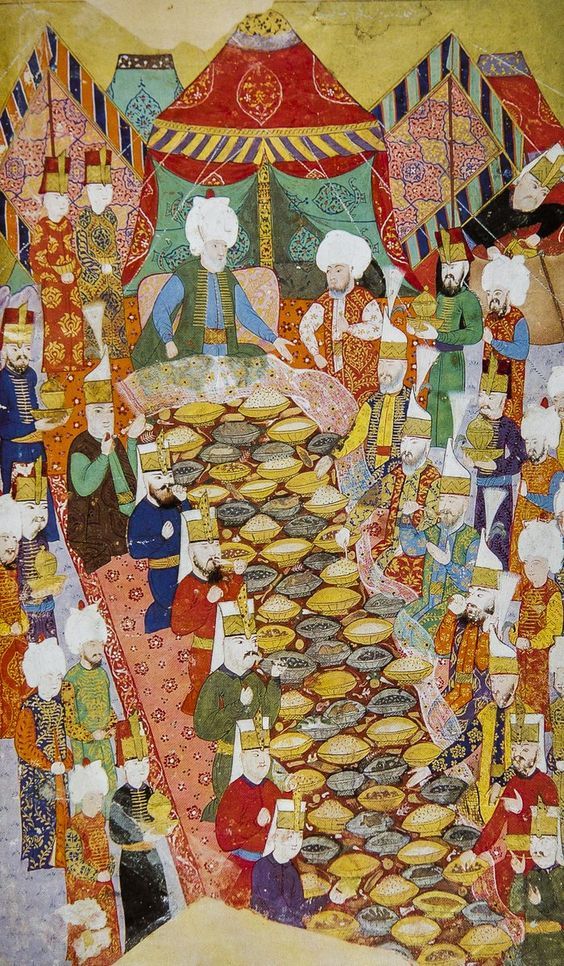
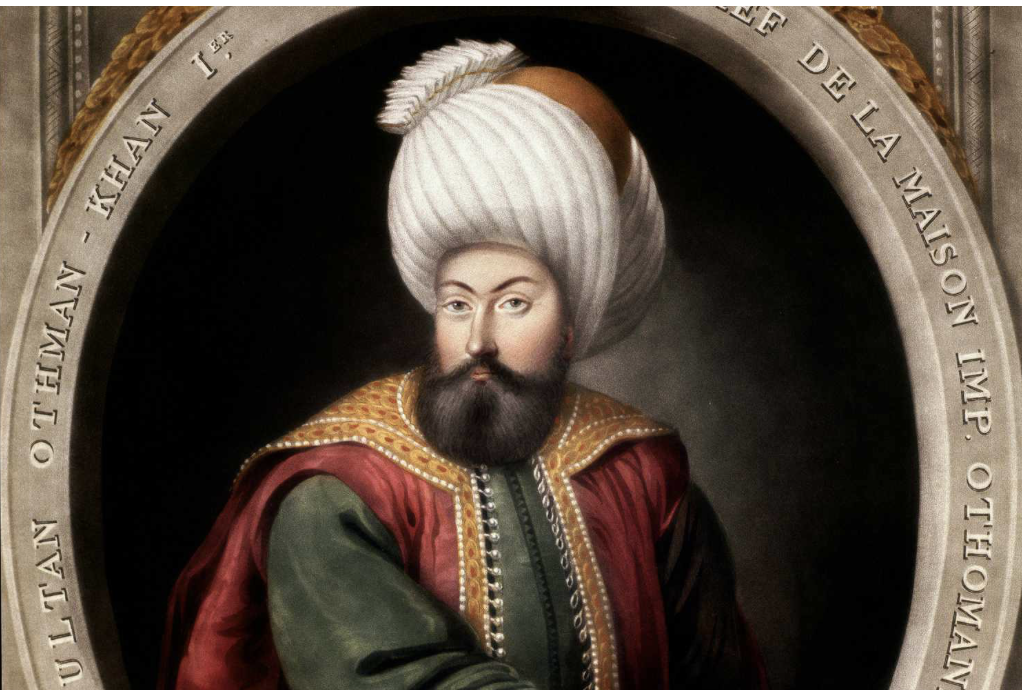
Over time, the Ottoman Empire was composed of Turks, Greeks, Armenians, Jews, Arabs, Tatars, Circassians, Albanians, Slavs, Kurds, Druze, and Levantine Christians⁶, among others. This is the reason why it is important to bear in mind that this was a multiethnic, multiracial, multireligious, and multilingual empire, and why it is not correct to call it “Turco-Ottoman,” as is commonly done in Brazil — at least not until 1908, when it in fact took on a Turkish character with the Young Turks⁷. Its founder was Osman I (r. 1299–1326), chief of the Osmanlı, known to us as Ottomans (Finkel, 2005, p. 5). He was a nomadic Turkish Muslim who migrated to majority-Christian Anatolia⁸ and initially established an emirate that still had a nomadic tradition, but which settled down and began to expand under his son Orhan (r. 1326–1359) (Baer, 2022; Finkel, 2005).
The Ottomans initially advanced through Anatolia (also known as Asia Minor), making the Byzantine city of Bursa their first capital from 1326 to 1365. Edirne (formerly Adrianople), also originally Byzantine, replaced Bursa as capital from 1365 to 1453 because of its strategic position between Anatolia and the Balkans. The mountainous region, already on the European continent, became a focus of the Ottomans in the 14th century, and the Battle of Kosovo in 1389 was a major milestone for both the Serbs and the Ottomans, since King Lazar and Sultan Murad I (r. 1359–1389) both died there. An essential practice for understanding Ottoman history was consolidated at this time: the devşirme (pronounced “devshirmê”). From it came the Janissaries (yeniçeri in Turkish, meaning “new force”), the infantry corps that played an essential role in the Ottoman expansion phase (Finkel, 2005, p. 28).
Every seven years (or more often, in periods of frequent war) officials would tour the Christian villages of the Balkans, forcibly recruiting teenage boys. According to the sixteenth-century regulation, the levy was of one boy from every forty households. These were taken off to Istanbul and Anatolia, converted to Islam, taught to speak Turkish, and trained to serve either as soldiers or as servants in the imperial household. Since the household was at the same time the imperial administration, and all officials of the imperial government were servants of the Sultan, this was in fact the road to advancement to the highest offices in the state. Many of the Ottoman Grand Viziers, and other members of the Divan (the Sultan’s council of state), began their careers in this way (Malcolm, 1998, pp. 95–96).
Sultan Mehmed II legalized fratricide in the legal code to counter succession feuds. The tradition was sanctioned in the 15th century and largely persisted until the 17th century, when, for the first time, a brother succeeded a brother⁹.
In 1453, Sultan Mehmet II (r. 1451–1481) finally took Constantinople from the Byzantines, establishing there the third and definitive Ottoman capital. For Westerners, the change from Christian to Muslim rule was described as the “Fall of Constantinople.” For the Ottomans, it was the “Conquest.” The event was so significant that it is considered the beginning of the Modern Age (1453–1789) and is connected to Europeans’ search for alternative routes to the Indies, leading them to the Americas in 1492, and to Brazil, eight years later. Fatih Mehmet (Mehmet the Conqueror), as he is known, left important marks on Ottoman and world history.
He conquered Constantinople and then sought to legitimize his victory and rule over it by appealing to Muslims and Christians alike. He called himself Caesar and claimed the inheritance of Rome, appropriating the monuments of Constantinople’s greatest ancient rulers, Constantine and Justinian. He rebuilt the city not only as the center of the Ottoman dynasty and the heart of his new imperial administration formed out of converts, but also as a multireligious metropolis . . . Mehmed II’s chroniclers, Greek and Ottoman, placed him in a long line of great leaders including the Macedonian Alexander the Great and the Roman Julius Caesar. They compared the conquest of Constantinople to those of Troy, Babylon, Carthage, Rome, and Jerusalem (Baer, 2022, p. 72, 79).
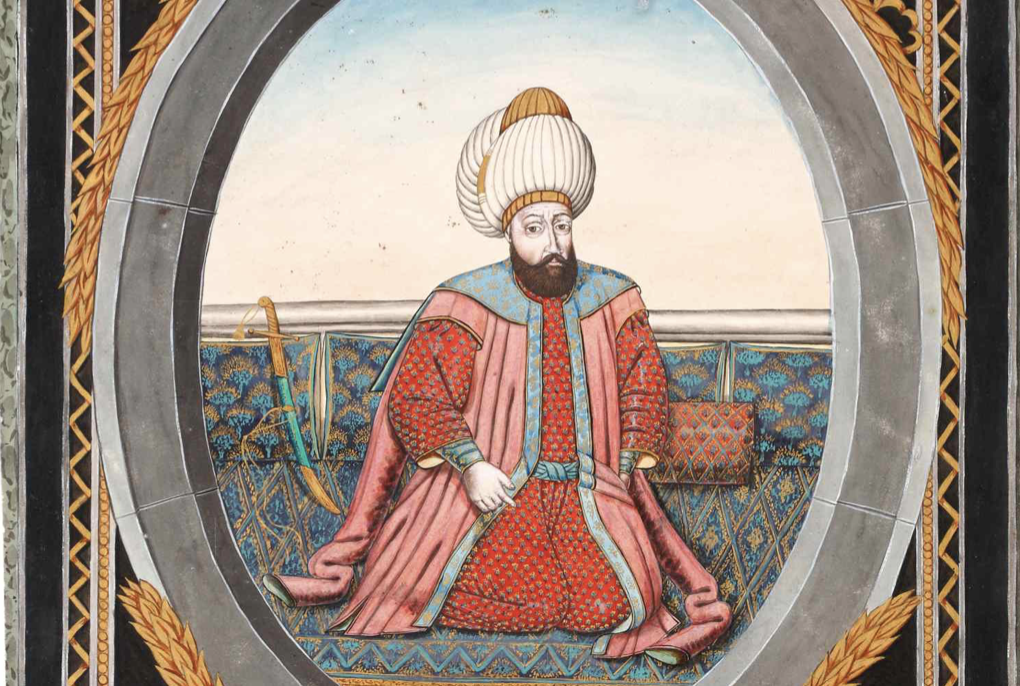 The Ottoman dynasty combined characteristics of the Byzantines, as well as of the Turco-Mongols¹⁰, and of the Muslim heritage. An “Ottoman way” was forged, with society divided into askeri (military and salaried servants of the sultan, as well as fief holders) and reaya (commoners and tax-paying subjects). Non-Muslim Christian and Jewish communities, considered People of the Book, were organized in the Ottoman Empire in the form of millets. This practice already existed in earlier Muslim entities such as the Umayyad and Abbasid empires, and indicated that, upon payment of a tax (cizye), their members were considered protected (dhimmi). In the Ottoman case there were millets of Orthodox Christians¹¹, Armenian Apostolics, and Jews. Ottoman Muslims held a higher position than Jews and Christians, men over women, and free people were more privileged than the enslaved. Islamic law (sharia) was mixed with secular law (kanun), based on custom and on the sultan’s decrees. The empire was largely based on meritocracy, respect for difference (there were no ghettos as in Christian Europe), and the projection of power both toward Eurasia and toward Christian Europe. The capital, Constantinople, now known as Istanbul, always had a profusion of ethnic groups, symbolizing its connections both with the East and with the West:
. . . Istanbul was a microcosm of the empire, a veritable alphabet of diversity: Abkhaz, Albanian, Arab, Armenian, Ashkenazi, and Austrian; Bosnian and Bulgarian, Catalan, Circassian, Cordovan, Crimean, and Croatian; Dalmatian; Egyptian; French; Georgian, German, and Greek; Hungarian; Indian, Iranian, Iraqi, and Italian; Jewish; Karaite and Kurdish; Laz; Macedonian and Moldovan; Palestinian, Polish, and Portuguese; Ragusan, Roma, Romaniot, and Russian; Sephardic, Serbian, Sicilian, Spanish, Sudanese, and Syrian; Tatar, Turcoman, and Turkish; Uzbek; Venetian and Vlach; Wallachian and Western European; Yemeni; and Zaza. And for O, there were Ottomans, who transcended all national and ethnic categories (Baer, 2022, p. 194).
In the early 16th century, the neighboring dynasty, the Persian Safavids (1501–1722), converted to Shiism, becoming a dual threat to the Ottomans — both against their territory and by potentially converting part of the Ottoman population¹². Selim I (r. 1512–1520), precisely in order to protect the empire’s eastern flank, expanded it into Kurdistan and Syria, taking from the Mamluks the Muslim holy cities of Mecca, Medina, and Jerusalem, as well as Cairo, a city as large as or larger than Constantinople (Baer, 2022, p. 138). This victory made Selim I the guardian of Islam’s holy cities and guarantor of the hajj pilgrimage routes, giving the Ottoman Empire new legitimacy as a caliphate from 1517 onward. The empire’s center of gravity then shifted to the East in cultural and geographic terms, now governing the Arab lands where Islam was born, and for the first time in its history, its population had a Muslim majority (Finkel, 2005, p. 110).
The Ottoman golden age came with Suleiman I (r. 1520–1566), known in the West as “the Magnificent,” but in Ottoman history as kanuni, “the Lawgiver,” for having aligned Islamic law and secular law, aiming at the consolidation of the empire and its bureaucracy. While continuing to expand the empire into places such as Belgrade and Rhodes, and fighting the Safavids over Baghdad and Basra, he planned to conquer Rome and claim the title of Holy Roman Emperor. Suleiman attempted to take Vienna in 1529, and the Ottoman threat to the Habsburgs contributed to the success of the Protestant Reformation and the rise and establishment of Protestantism in Europe. Martin Luther included in his theses a protest against the granting of ecclesiastical indulgences to finance wars against the Ottomans (Baer, 2022, p. 151).
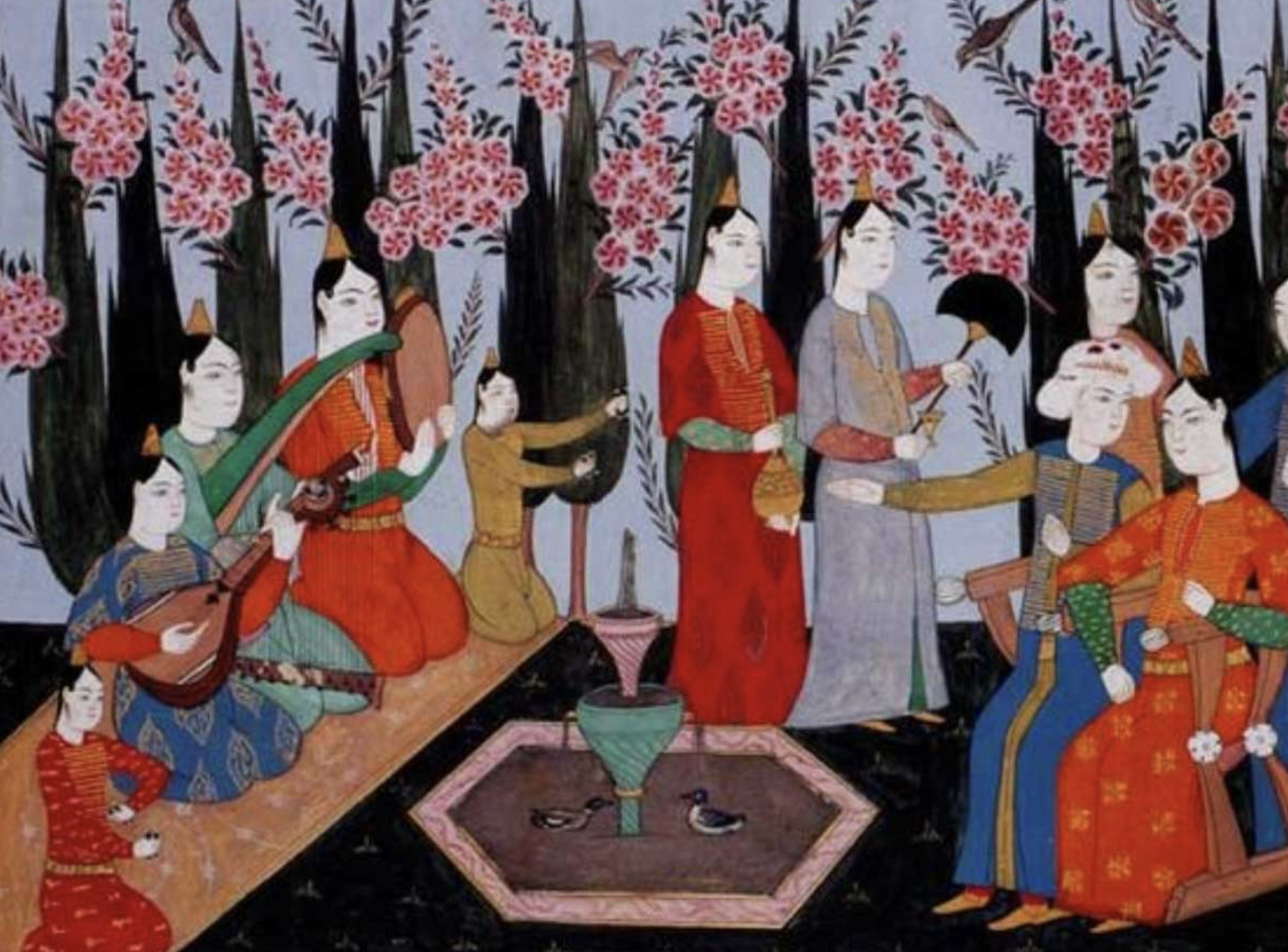 With Suleiman’s death, the Ottoman Empire entered a new phase of politics and even of reproduction. A sedentary sultanate replaced the warrior sultanate, and along with it came the influence of the women of the harem. The first half of the 17th century thus became known as the “Sultanate of Women,” with sultanas acting as regents for their sons, and seniority became the norm for succession in place of the aforementioned fratricide. The second half of the same century, meanwhile, was dominated by an Albanian sub-dynasty of civil servants originating from the devşirme system, the Köprülüs (Malcolm, 1998, p. 143). The Ottoman Empire then lost its military superiority, and a phase began in which sultans were deposed and even assassinated. It was during this period that the Ottomans made their second attempt to take Vienna, in September 1683, understood by many as the beginning of its “fall.”
The ignominious Ottoman defeat was of great psychological importance for the Habsburgs and the whole of Europe. It seemed to Western observers that the tide of Ottoman conquest was turning. The literary production of the time reflects the exaggerated expectations of contemporaries that the forces of Christianity would at last triumph after centuries of struggle. The Vienna debacle was certainly a blow for the Ottomans – at the time, however, they had no idea that it was merely the first in a chain of defeats which would end only in 1699 with a humiliating and highly unfavorable peace (Finkel, 2005, p. 288).
At the turn of the 17th to the 18th century, the Ottoman Empire found itself forced to sign a treaty with a European power, in this case the Habsburgs, and to lose territories, and increasingly had to face the Russian enemy, which took Crimea and aimed at Constantinople in order to “reestablish the Byzantine Empire under Russian rule” (Baer, 2022, p. 326). On the one hand, it was from Ottoman port cities such as Izmir and Salonica that raw materials such as grain, wool, cotton, and dried fruit departed for the flourishing European industry. On the other hand, from Europe in upheaval after the French Revolution came two problems that would impact the Ottoman Empire until its last breath: imperialism and nationalism.
In 1798, Napoleon Bonaparte diverted part of his troops from the European theater and invaded Ottoman Egypt and Syria with military forces and forces of “savants” (Cole, 2008)¹³. This act signaled an important change in the status of the Ottoman Empire, since it took place within the framework of disputes between the French and the British, given that Egypt was central to British interests in India. Taking Egypt, besides blocking the growth of the British Empire in the East, would also give the French control over valuable commodities, especially sugar, but also coffee (Cole, 2008, p. 55).
Ruling the Ottoman Empire at that time was Sultan Selim III (r. 1789–1807). At the same time that a new narrative of what had once been the classical world was gaining strength in the West, and an idealized and distorted vision of the East was taking shape — one that the Palestinian intellectual Edward Said (2010) would later study through the lens of “Orientalism” — the Ottoman Empire began an important phase of reforms aimed at its survival in the face of challenges now coming largely from the West.
. . . eighteenth and nineteenth century sultans and elites launched reforms to strengthen the empire against occupation and colonization from abroad and chaos within. In their view, they needed to modernize the empire, striking the right balance between European innovations and strengthening their own traditions. Reforming sultans went so far as to wipe out the Janissaries, suppress the Bektashi Sufi order¹⁴ with which the army was affiliated, and ostensibly abolish the hierarchical order based on religious and class differences. Conversion to Islam was no longer a path to assimilation. But instead of saving the empire, these changes deepened the chasm between Ottoman Christian and Muslims (Baer, 2022, p. 328–329).
Selim III sought to modernize the Ottoman armed forces, incorporating advances from French, Prussian, and Russian military science, within what was called the New Order (Nizam-i Cedid). This period also saw the establishment of the first regular and permanent Ottoman embassies in Europe, starting in 1792. The diplomats had instructions to study European institutions as well as to acquire “language, knowledge, and sciences useful to those who serve the Empire.” Selim III was deposed, but Mahmud II (r. 1808–1839) continued with reforms even in the face of Janissary revolts, the Greek War of Independence (1821–1830), and uprisings by local notables. He abolished the Janissaries in 1826 and created a conscription-based army, further altered clothing by imposing the fez in 1829, while at the same time losing Algeria to France in 1830, and facing conflicts with the province of Egypt and wars with Persia and Russia.
The reform attempts of the early 19th century laid the groundwork for the transformations that took place over the course of the century, whose great effort was to centralize in order to modernize and defend the empire. It was during this period that the so-called “Eastern Question” arose, which, from the point of view of the European powers, meant figuring out how to balance their own interests with those of the emerging nation-states while dividing up the Ottoman Empire (Baer, 2022, p. 343–344).
The period from 1839 to 1876 is known in Ottoman history as the Tanzimat (Reorganizations). Although its sultans were Abdülmecid I (1839–1861) and Abdülaziz (1861–1876), in practice power lay in the hands of three pashas (Mustafa Reşid, Fuad, and Aali), who had studied in Europe and learned languages, and alternated in decision-making throughout the two sultanates. This period is also known as the “Era of the Sublime Porte” (Bab-ı Âli), where the grand viziers’ headquarters were located, which also included the foreign and interior ministries and important councils (Findley, 2010, p. 76). This was a phase in which the Ottoman Empire became more directly dependent on Europe and had to answer to its subjects. What mattered above all to the West was the defense of the empire’s Christians, and the empire joined forces with England, France, and Sardinia against the Russians in the Crimean War (1853–1856). This war and the empire’s participation in the Paris Conference at its conclusion not only represented Europe’s recognition of Ottoman power, but also allowed for a series of internal modernizations: telegraphs and railroads, in particular.
As Carter Findley points out (2010, p. 23), the 19th century saw a radical shift away from a past of decentralization, with the “Porte” now seeking centralization and defensive modernization. However, while studying and trying to emulate European institutions, the Ottoman leadership sought to maintain its own ethos. In 1860, the Young Ottomans (Yeni Osmanlılar) gained prominence — a heterodox group demanding an end to the bureaucratic despotism of the pashas then in power, aiming at the modernization of the Ottoman Empire, with a constitutional monarchy and a free press. This elite promoted an egalitarian concept of Ottomanism (Osmanlılık) to cement unity (Findley, 2010, p. 100).
In 1876, Sultan Abdul Hamid II (r. 1876–1909) took power amid a new war with Russia, and initially made reforms such as allowing the establishment of a parliament, but soon brought power back to the palace. He maintained some Tanzimat reforms in diplomacy and the military, but began using Islam to emphasize the tradition and Muslim character of the empire, for example.
Faced with intense foreign pressure, debilitating power struggles among the elite, and an ability to obtain financial resources to meet his goals, the sultan sought a way to strengthen and save the empire. He chose to do so through modern strategies infused with religious meaning, promoting himself as caliph in charge of a modernized Islam and an Islamized empire, and converting sectarian groups. He became a ruler who was as much a modernist who opposed the West as an Islamist who emphasized secular technical education (Baer, 2022, p. 363).
The Ottoman Empire became increasingly dependent on the European capitalist core, facing serious economic difficulties and accumulating unpaid debts. In 1881, the Public Debt Administration was created, with Europeans controlling public finances and tax collection, as well as concessions such as railroads. These concessions troubled conservative Muslims, who felt diminished from their superior status derived from sharia, and this led to unrest in localities in Syria and Lebanon (Findley, 2010, p. 100). Foreign penetration of the empire occurred through both economic and cultural channels. The major and middle powers had diplomatic missions in Constantinople and consulates throughout the empire. And Christian missionaries — Catholic and Protestant, from Europe and the United States — competed to open schools and health services. The Armenian question, in particular, became internationalized after the Treaty of Berlin, as did the Ottoman losses in the Balkans, causing the empire to shift its center of gravity back toward Anatolia and the Arab lands. The Muslim share of the population went from 60% before 1878 to 72% in the 1880s census and 74% in 1906–1907. The empire gained two million Muslim immigrants and refugees and lost about 300,000, almost all non-Muslim, usually heading to the Americas (Findley, 2010, p. 175–177).
If the beginning of the Ottoman Empire came with a tolerant ethnic Turkish leadership that expanded across Anatolia, coming to dominate three continents, its last breath came with the so-called Young Turks. The group began in 1889 with students at the Military Academy of Medicine, and saw non-Muslim separatism, supported by European powers, as the central threat. They created the so-called Committee of Union and Progress (CUP), which also drew on the same positivism of Auguste Comte that had influenced the motto on the Brazilian flag, but understood that, for the Ottoman context, “union” was more important than “order”. Its members sought to use scientific materialism and the social sciences, especially sociology and psychology, in addition to Islam, as means of mass mobilization. The group was, however, radically secular, and its effort, in the face of ethnic revolts and foreign intervention threatening the empire, was not to destroy the sultanate but to transform it (Findley, 2010, p. 161, 164–5).
The Young Turks came to power with a revolution in 1908. Their administration began under the flag of freedom and modernity, and ended in a military dictatorship and the end of the empire. The movement radicalized especially from 1912 onward, once again under three pashas: Enver, Talat, and Cemal. Elections began to be manipulated, and a period of continuous wars began that led to the definitive end of the Ottoman Empire — in Tripolitania (1911), the Balkans (1912–1913), World War I (1914–1918), and the Turkish War of Independence (1919–1923). The movement initially attracted Arabs, Albanians, Jews, and even Greeks and Armenians, but became increasingly Turkified and sought ethnic homogenization; it is in this context that the 1915 Armenian genocide must be understood. “Centuries of symbiosis under the banner of a multiethnic Islamic state had ended under the cover of wartime necessity and in the name of nationalist social engineering” (Findley, 2010, p. 211). The Ottoman Empire fought World War I on the side of Germany, and that war was its burial. The Treaty of Sèvres, of 1920, at first strangled it, but the Treaty of Lausanne, of 1923, recognized the Republic of Turkey, born from its hard core, giving rise to another history.
On the Historiography of the Ottoman Empire
Initially, in the Republic of Turkey, established by Mustafa Kemal Atatürk in 1923, there was no wish to deal with Ottoman history, as the aim was to build a new narrative, focused on the Turkish past and on the “Anatolian civilizations.” Ottoman studies have, however, been gaining considerable momentum in recent decades, and practically every leading university in the US and Europe has Ottomanists, and all the major Turkish universities also have departments and specialists. The government of Recep Tayyip Erdoğan, begun in 2002 and is still in power today, albeit in a different guise, looks favorably on this interest.
If we had to identify a first Ottomanist of impact, however, the name that stands out would be that of the Austrian Paul Wittek (1894–1978). Having served in World War I as an officer in Istanbul, he learned Ottoman Turkish there, and in the 1920s published his first texts on the empire. He lived for about a decade in Istanbul, working on the creation of the German Archaeological Institute in the city. With Hitler’s rise to power in Germany, Wittek, who was Jewish, lost his position and moved to Brussels in 1934. With the attacks on Belgium, he went to England, where he was initially interned in a camp as an enemy alien. His British Orientalist colleagues helped free him and get him a position at the University of London. Wittek then took up the newly created Chair of Turkish at the School of Oriental and African Studies (SOAS) and worked there until his retirement in 1961. He published little, but in 1938 his text “The Rise of the Ottoman Empire,” derived from lectures he gave between 1936 and 1938 at the Free University of Brussels, established the thesis that the Ottoman Empire was a ghazi state, with a Holy War/ghaza ethos¹⁵.
The ghazi state theory had great impact until the 1980s, shortly after Wittek died in 1978, even influencing Perry Anderson (2004, p. 362–363), who said that the Turkoman tribes were marked by “a militant faith of Muslim crusade that rejected all accommodation with the infidel, of the kind that would come to define the constituted states of early Islam.” This theory has since been largely challenged, above all for being based on scant empirical evidence. Rudi Lindner¹⁶ holds that Wittek was greatly influenced by Ernst Kantorowicz, and that his analysis of Ottoman history was in reality an intellectual outlook of early-20th-century Central Europe, more than an actual history of the Ottoman Empire. Lindner points out that, since the early Ottoman phase involved a nomadic and pastoral entity, sources are extremely scarce, requiring recourse to Byzantine Greek sources and to those of religious foundations (waqf), and that this period still requires further research.
The person who turned Ottoman studies into a leading field, however, was a native of the empire itself: Halil İnalcık (1916–2016). İnalcık (pronounced “Inaljik”) was born in Istanbul into a Tatar family, being in fact an Ottoman, since he came into the world before the end of the empire and had Ottoman Turkish as his mother tongue. He trained in the new Turkish capital in the 1940s and taught at Ankara University from 1952 to 1972, having also spent periods at Columbia, Harvard, Princeton, and Pennsylvania before moving to the University of Chicago, where he taught from 1972 to 1986, training a number of young historians who would go on to prominence, such as Fariba Zarinebaf and Linda Darling. His research covered the history of Crimea, Albania, and 15th-century Anatolia to 19th-century Bulgaria, and ranged across social, political, and economic history, from farmers to sultans. A prolific writer, he published more than five hundred academic articles and sixty books, which were widely translated¹⁷.
İnalcık’s goal was to use empirical evidence to address Ottoman history, drawing on archival sources, chronicles, and even non-Ottoman sources, effectively creating the modern field of historical research. Or, as his former students put it, “converting an obscure and exotic subfield into a leading discipline” (Zarinebaf et al., 2017). He was a pioneer in the use of Ottoman archives and always fought for access to and preservation of sources, in addition to popularizing Ottoman history for the general public in Turkey. He also took part in founding journals such as the Archivum Ottomanicum in 1969 and the Journal of Ottoman Studies in 1980, and institutions such as the International Association for Ottoman, Social and Economic History in 1977. From 1993 until his death in 2016, he worked at Bilkent University in Ankara, where I had the opportunity to study initially, interested in gaining access to his collection deposited there. When I studied at Bilkent in 2010, İnalcık, by then elderly, essentially only supervised doctoral dissertations, but I did have the honor of attending one of his lectures. Halil Hoca (Master Halil, as he is known) was buried at the Fatih Mosque in Istanbul, demonstrating his importance as a scholar of Ottoman history. His tomb lies next to none other than that of Sultan Fatih Mehmet.
Research on Ottoman history has become increasingly specialized in recent decades, out of this dual — and practically equal — effort by scholars in Turkey and in the West to refine it. There is even circulation of Ottomanists between universities in both regions. Cemal (pronounced “Djemal”) Kafadar, a native of Istanbul and professor of Turkish studies at Harvard University, is perhaps the most prominent, conducting research on the social and cultural history of the Ottoman Empire with a strong interface with film. Ahmet Tunç Şen (pronounced “Tuntch Shen”) is also a Turkish native and teaches Ottoman history at Columbia University in New York. His focus is the history of mentalities, of science and divination, as well as the history of books, manuscripts, and reading. Şen is, in fact, an example of how Ottomanists have also stepped outside the academic bubble and taken part in wide-reaching audiovisual productions. He is one of the specialists who appears in the renowned series “Rise of Empires: Ottoman,” available on Netflix since 2020 and focused, in its first season, on the taking of Constantinople in 1453. The series juxtaposes dramatization of the event with testimony from leading specialists on the subject, and besides Şen, it features both European and Turkish scholars such as Jason Goodwin, Karen Barkey, Roger Crowley, Marios Philippides, Celal Şengör, and Emrah Safa Gürkan. The boom in Turkish soap operas includes many period productions set in the Ottoman Empire, such as Magnificent Century and Kösem, which have relied on the work of historians to support script development as well as research for art production.
Research on the Ottoman Empire has become increasingly specialized, but it is worth noting the works that attempt to cover the whole of Ottoman history, in particular Osman’s Dream, by Caroline Finkel, and The Ottomans, by Marc David Baer, both widely cited here. Finkel is British, based in Istanbul, and holds a doctorate from the School of Oriental and African Studies at the University of London (SOAS). She also works as a journalist and devised an equestrian, hiking, and cycling route in Turkey called the “Evliya Çelebi Way,” recreating part of the route followed in the 17th century by the Ottoman traveler Evliya Çelebi — an experience that could one day perhaps be compared to or connected with our own “Estrada Real.” The effort of her book was to update the public on research covering the whole of Ottoman history and to counter the simplified notion that the Ottoman Empire rose, declined, and ceased to exist (Finkel, 2005, p. xi). Baer, for his part, is American, and a professor of International History at the London School of Economics. In his work, he seeks to push back against the limits of Wittek’s thesis, declaring that what mattered in the empire’s early years was that sultans should have ability and service, not religion (Baer, 2022, p. 29). Baer demonstrates throughout how the Ottoman Empire was also a European empire.
As noted, in recent decades research on Ottoman history has grown substantially, whether coming from Turkey itself or from the major Western centers. A quick search on the Ottoman History Podcast gives a sense of how “all history is contemporary history,” as Benedetto Croce used to say. The most recent episodes cover research on gender, refugees, the relationship between religion and science, the situation of the Kurds, and the Armenian genocide, in addition to the history of the Palestinians, given the war in Gaza since October 2023, and the history of Crimea, in light of its seizure by Russia in 2014, with a narrative that erases its Tatar past. Brazil, which was the subject of my doctoral dissertation on its relations with the Ottoman Empire between 1850 and 1919, appears in episode 565, from April 11, 2024, featuring an interview with Professor Ali Kulez of Boston University, dealing with the history of the visit of the Ottoman imam al-Baghdadi to Brazil in the 1860s¹⁸. Very proudly, my book is cited in the episode’s recommendations.
Studies of Ottoman History from a Brazilian Perspective
To study Ottoman history, following and deepening the milestones presented in the previous sections of this article, is to practice Global History. That is, it necessarily means placing the West in perspective (and even demonstrating how much of an Islamic past it has), as well as questioning methodological nationalism (Santos Júnior & Sochaczewski, 2017).
Europe’s actions, which usually guide our historiography, did not in fact arise by spontaneous generation or operate in a vacuum. The so-called Renaissance and the Protestant Reformation, which occurred as a prologue to the Great Navigations, were not driven solely by internal European matters, but were also connected to, or a reaction to, Ottoman Empire affairs. As Peter Burke shows well (2008, p. 29), Byzantine professors fleeing the Ottoman advances took refuge in Italian city-states such as Florence and Padua, bringing with them knowledge of the Greek language essential for accessing Greek texts in their original tongue. This exchange between Eastern and Western Christianity played an important role in the Renaissance. And as the Ottomans advanced and took Constantinople, the Catholic Church sought to raise funds for a new Crusade. The so-called indulgences — a mechanism created by the Catholic Church to raise funds in the attempt to retake Constantinople — were part of this context and lie behind the rift in the Church that led to the emergence of Protestantism (Puchner, 2019, p. 190).
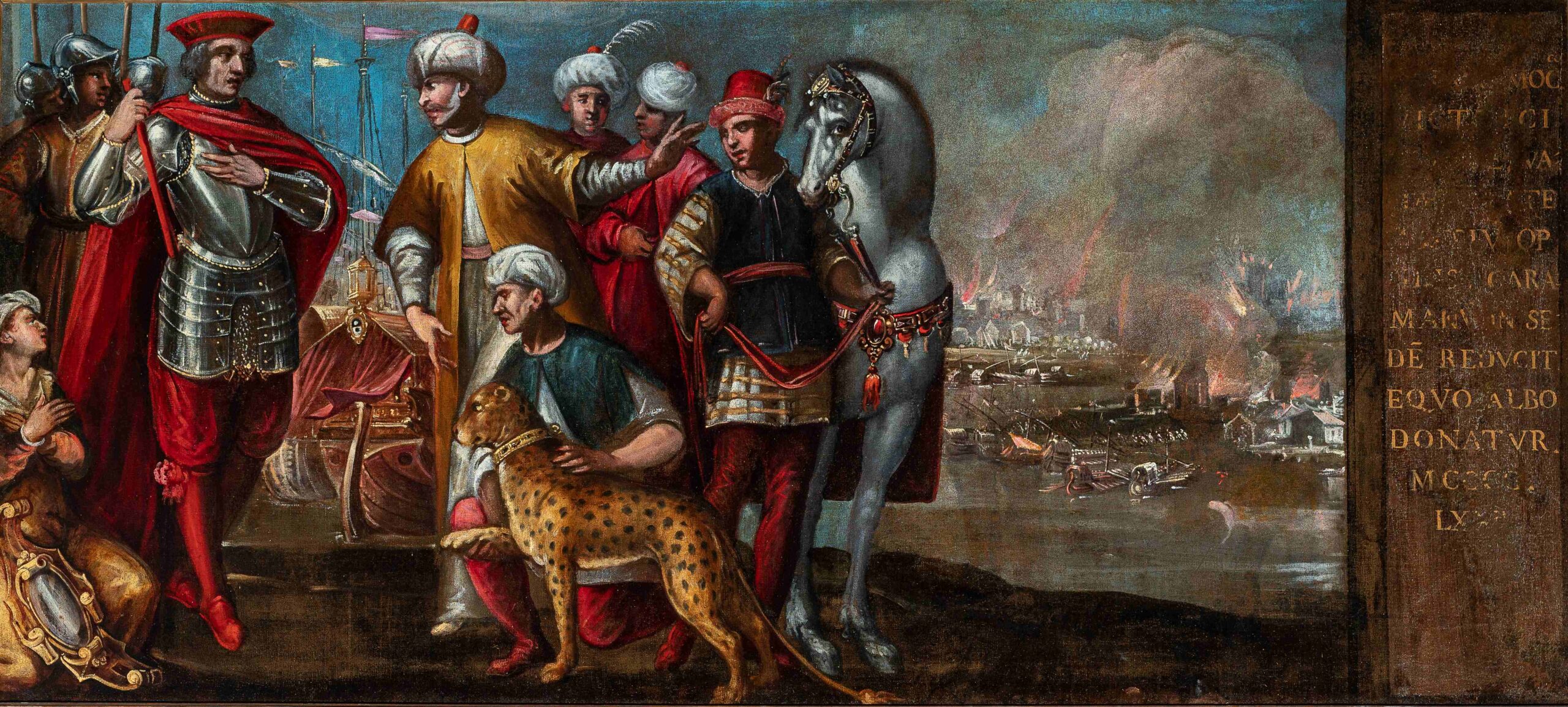
On the other hand, the Ottoman advance in the 14th and 15th centuries ran up against the colonies of the Italian city-states, an important trial run for the colonies that would later be established in the New World. In the Black Sea, the Ottomans encountered colonies maintained there by Venice, as was the case with Tana on the Sea of Azov, and by Genoa with Caffa (Feodosia). These colonies were trading posts for the export to the West of raw materials such as furs, silk, spices, precious stones, and pearls. The sultans at times sided with one city-state against another, or supported one of them against the Byzantines, as was the case with Sultan Orhan and the support he gave to Genoa in its conflict with Venice, supplying its fleets and its trading colony in Galata. The Netflix series “Rise of Empires: Ottoman,” which recounts the Ottoman capture of Constantinople in 1453, focuses in part on the relationship between the Ottomans and the Genoese as they positioned themselves against the Byzantines, for example.
It is always worth stressing that it was the Ottoman capture of Constantinople that led Europeans to seek alternative routes to the Indies and to arrive here. And in 1492, the same year Columbus reached the Americas, the Spanish expelled the Jews from their domains. Four years later, the Portuguese did the same. There is a rich historiography in Brazil examining the history of these Jews, part of whom went to the Netherlands and from there to Northeastern Brazil in the 17th century, with many later moving on to what would become Suriname, the Caribbean, and even New York¹⁹. There is another part of this story, however, which is that of the majority of these Jews going to Ottoman lands. These Sephardim joined the Romaniotes, Ashkenazim, and Karaites²⁰, not only becoming part of the Ottoman Empire’s Jewish millet but also imposing themselves over the other subgroups. It is because of them that Ottoman Jews spoke, almost entirely, Ladino, Judeo-Spanish.
The history of Ottoman Jews closely parallels that of the “rise and fall” of the Ottoman Empire, with its peak in the 16th century, with great physicians and bankers such as Gracia Mendes (1510–1569), and a decline in the 19th century, with the community having to reinvent itself to cope with decadence, particularly in the face of Greeks and Armenians who were rising in proximity to Europeans. It is in this context that the Alliance Israélite Universelle emerges, created by French Jews in 1860, seeking Jewish self-sufficiency through education and professional development, and creating more than a hundred schools for Jews in Ottoman lands.
At the turn of the 19th to the 20th century, a significant number of Ottoman Jews, from cities such as Salonica, Izmir, and Constantinople, migrated to Brazil. Prominent figures in Brazil such as the historian Boris Fausto, the journalist Helena Salem, the economist Joaquim Levy, the jurist Luís Roberto Barroso, and the broadcasters Luciano Huck and Silvio Santos/Senor Abravanel are among their descendants. This shows that Jewish history is far more than a European story and that, contrary to popular claims, Islam has a history of tolerance and of embracing others. Jews who fled the Inquisition found shelter and flourished under Ottoman rule. The case of the city of Salonica, from which some of Silvio Santos’s relatives came, had a Jewish majority for much of its history. Those who annihilated them almost entirely, using modern extermination techniques, were the Nazis of Europe (Mazower, 2007).
The Ottomans knew about the Americas from the moment Europeans first arrived there. In 1513, Admiral Piri (Piri Reis, in Turkish) met with Sultan Selim I and gave him a map showing the outline of the New Continent. A fragment of this map is part of the collection of the Topkapı Museum, the most important institution of the Ottoman past, located in the heart of Istanbul. I show in the book derived from my doctoral dissertation (Sochaczewski, 2017) that Ottoman intellectuals of the time encouraged the sultans to expand into the Americas as well.
In the 17th century, when the first publications appeared in the Ottoman Empire by İbrahim Müteferrika (1674–1747), some already made reference to the Americas. And at the end of the 18th century, Francisco de Miranda, a comrade-in-arms of Simón Bolívar, spent time in Constantinople and left an account that appears to be the first by a native of the American continent in Ottoman lands (Toledo Mansilla, 2004). It is well worth consulting this text and seeing that, at a time when Orientalism was beginning, there was also a disinterested account, one not aimed at stereotyping Easterners or at governing their lands. Even Edward Said’s Orientalism has its limits if we broaden our view of the world — and of encounters between worlds — beyond the West.
In the 19th century, the first rapprochement between Brazil and the Ottoman Empire came through the presence of Ottoman consuls in Rio de Janeiro. Ottoman ships, sometimes en route to their own domains — such as from Constantinople to Basra — had to stop in our ports for the so-called “watering” before the popularization of steam navigation. The account of the Ottoman imam Al-Baghdadi, who disembarked from one of these ships in the 1860s and remained in Brazil for about three years, fits into this context (Bercito, 2024).
Dom Pedro II visited the Ottoman Empire twice, and in 1876 he wrote in his diary that Christian survivors of the 1860 massacres carried out by Druze wished to emigrate to Brazil. Despite being enamored of the “Middle East,” Dom Pedro II did nothing to directly encourage this migration, since it did not fit into the whitening and “civilization” project of the Brazilian elite of the time. Although the great majority were Christian (Maronite, Melkite, Orthodox, and Protestant Arabs; Greek Orthodox; and Armenian Apostolic, Catholic, and Protestant), they were considered “imperfect whites.”
When I began my doctoral research in the Prime Minister’s Archives in Istanbul, I did not think I should look into emigration. I assumed at the time that there was already definitive work on the history of “Arab immigration” to Brazil. What the empirical evidence showed me, however, was that not only did Constantinople follow this emigration with concern over its possible impacts on separatism within its territory (especially in Syria and Lebanon), but that the term “Arab” is largely anachronistic. It was, in reality, an emigration of Ottoman subjects with diverse identities, Arab being only one of them. And if the Ottoman Empire was definitively ceasing to exist as a multiethnic, multireligious, multiracial, and multilingual empire, giving way to a Republic of Turkey at its hard core, or losing territories to European imperialism, Brazil (in the empire’s final phase and during the Republic) gained more colors and flavors with the former Ottoman subjects who came here.
Final Considerations
As has been shown here, the history of the Ottoman Empire is vast and complex, with much back-and-forth in terms of the centralization and decentralization of power, whether in the figure of the sultans themselves versus the bureaucracy, or in relation to the Ottoman center in Constantinople and its provinces. And Ottoman historiography has gained great prominence and complexity, especially in recent decades.
In Brazil, where studies of Global History and of Middle Eastern history are finally gaining ground, there is an urgent need to better understand and disseminate the history of the Ottoman Empire. It not only helps us put Europe in perspective, but also presents us with another form of empire, of slavery, of colonies, and of other forms of Christianity beyond the Catholic or evangelical ones that seem to us to be the only ones, given their majority status in Brazil. We also see that there is another history beyond the imperialism/colonialism paradigm. The contacts between Brazil and the Ottoman Empire at the turn of the 19th to the 20th century are examples of South-South relations avant la lettre. Despite efforts toward greater economic proximity, within the framework of the coffee trade, what connected the two was immigration. People who came from there to here and enriched our cuisine, our literature, our culture in general, and even our politics — mistakenly called “Turks,” since most were Arabs with large Armenian, Jewish, and Greek components. These ties should encourage us to better understand the long-lasting and vast empire established by a Turk named Osman.
This article was originally published in Portuguese in Esboços, Florianópolis, v. 32, p. 1-22, 2025ISSN 2175-7976DOI: http://doi.org/10.5007/2175-7976.2025.e106590 – Copyright Monique Sochaczewski.
End Notes
-
The dissertation was defended in 2012 in the Graduate Program in History, Politics, and Cultural Assets at CPDOC/FGV and published as a book in 2017 by the Alexandre de Gusmão Foundation, of the Ministry of Foreign Affairs.
-
In 2010, I spent the spring semester (January to June) as a special student in the History doctoral program at Bilkent University in Ankara, and conducted research in the Prime Minister's Archives, in the Istanbul University collection, and at the American Research Institute in Turkey (ARIT) in Istanbul, as well as at the Turkish National Library in Ankara. In the case of the Prime Minister's Archives in Istanbul, I was definitely the first Brazilian to research there, since the system did not previously have "Brazil" as a researcher's country of origin, making it necessary to call in a technician to add it when I registered.
-
Podcast created in March 2011 that became one of the main digital sources for academic debates on the history of the Ottoman Empire and the modern Middle East. It currently has fourteen seasons and about 570 episodes, with the participation of many of the world's leading researchers on the subject. Link: https://www.ottomanhistorypodcast.com/
-
Descendants of Europeans who settled as merchants in the Ottoman Empire, generally Latin Catholics (Genoese, Venetians). Not to be confused with the Levant, the region on the southern Mediterranean coast where, from the European point of view, the sun rises (Cole, 2008, p. 10). Broadly, this subregion refers to what would today be Syria, Lebanon, Israel, Palestine, and Cyprus.
-
It is only correct to speak of "Ottoman Turkish" when referring to the language, which is different from the modern Turkish spoken today in the Republic of Turkey. According to Marc Baer (2022, p. 190), it was a composite of Arabic, Persian, and Turkish grammar and vocabulary, written in a modified Persian script, and was the language of administration and culture, especially poetry. Caroline Finkel (2005, p. xii) notes that the past is truly another country in Turkey, where citizens of the Republic do not have easy access to texts from eras before its establishment, owing to the change from the Arabic script to the Latin alphabet in 1928.
-
It is common to use the date of the Battle of Manzikert, in 1071, as the starting point for the presence of ethnic Turks in Anatolia, through the Seljuks who defeated the Byzantines there. The Seljuk Empire lasted from 1037 to 1118 (Baer, 2022).
-
Baki Tezcan. "Rethinking 'Decline' in the Second Ottoman Empire." Ottoman History Podcast, episode 300. Link: https://www.ottomanhistorypodcast.com/2017/02/rethinking-decline.html Accessed Feb 3, 2025.
-
The Crimean Khanate (1475–1783) was made up of descendants of the Golden Horde of Genghis Khan. The Giray dynasty that ruled there gave Mongol legitimacy to the Ottoman Empire, and for this reason had its own diplomacy and alliances, and for a time collected tribute from the Russians. The Khans recognized the sultan's superiority but could mint their own coins and were referenced in Friday sermons. The Crimean Tatars had cavalry expertise that was important in the Ottomans' battles in Europe. They also played a central role in the enslaved-persons trade in the Ottoman Empire. It is believed that from their raids in Eastern Europe and the northern Caucasus they took about two million enslaved people between 1500 and 1700, a number comparable to the Atlantic slave trade in the same period (Baer, 2022, p. 128).
-
This millet included, besides the Orthodox Greeks, all the empire's Orthodox Christians, including those who spoke Arabic, Bulgarian, Romanian, and even Turkish (Findley, 2010, p. 101).
-
Shah Ismail (r. 1501–1524) founded the Safavid dynasty in 1501, in Tabriz. The Persians were already Sunni Muslims and converted to Shiism at that point. The Safavids influenced the Kurds and Turkomans living in the Ottoman Empire, generating competition (Baer, 2022, p. 120).
-
A commission of science and arts made up of 151 people, 84 with technical qualifications and another ten who were physicians, forming the largest body of specialists ever to accompany a French military expedition (Cole, 2008, p. 3).
-
Dervish orders were present in the Ottoman Empire from the beginning. The Bektashi order was originally a smaller sectarian group, but it gained prominence and connections with the sultans' elite infantry troops, the Janissaries (Finkel, 2005, p. 9).
-
Rudi Lindner. "The Origins of Ottoman History." Ottoman History Podcast, episode 511. Link: https://www.ottomanhistorypodcast.com/2021/08/rudi.html Accessed Feb 9, 2025.
-
Rudi Lindner. "The Origins of Ottoman History." Ottoman History Podcast, episode 511. Link: https://www.ottomanhistorypodcast.com/2021/08/rudi.html Accessed Feb 9, 2025.
-
http://bilnews.bilkent.edu.tr/bilkent-community-mourns-the-loss-of-halil-inalcik/ Accessed Feb 8, 2025.
-
https://www.ottomanhistorypodcast.com/2024/04/kulez.html
-
See in particular Ronaldo Vainfas. *Jerusalém Colonial*. Rio de Janeiro: Civilização Brasileira, 2010; and Lira Neto. *Arrancados da Terra*. São Paulo: Companhia das Letras, 2021.
-
The Romaniotes were Jews originating from the Byzantine Empire and Greek-speaking. The Ashkenazim were Jews expelled from Hungary in 1376 and from France in 1394 who had already sought refuge in Ottoman lands, as did Bavarian Jews in the 15th century. Lastly, the Karaites were/are Jews who accept only the Torah and not its interpretations, such as the Talmud. Later, from 1517 onward, there would also be the Musta'aravim/Mizrahim, i.e., Arabic-speaking Jews.
References
Anderson, P. (2004). Lineages of the Absolutist State. São Paulo: Brasiliense.
Baer, M. D. (2022). The Ottomans: Khans, Caesars, and Caliphs. London: Basic Books.
Bercito, D. (2024). Teaching Islam to African Muslims in Brazil: an Ottoman’s nineteenth-century travel account. International Journal of Latin American Religions, 8, 107–122.
Burke, P. (2008). The Renaissance. Lisbon: Edições Texto & Grafia.
Cole, J. (2008). Napoleon’s Egypt: Invading the Middle East. New York: Palgrave Macmillan.
Farah, P. D. (2008). The connections between the Empire of Brazil and the Ottoman Empire in the 19th century and the use of sources beyond the Europhone space. Connected Histories, Postcolonial Dynamics. Curitiba: Fundação Araucária.
Findley, C. V. (2010). Turkey, Islam, Nationalism, and Modernity: A History, 1789–2007. New Haven/London: Yale University Press.
Finkel, C. (2005). Osman’s Dream: The History of the Ottoman Empire. New York: Basic Books.
Loureiro, H. de A. C. (2016). Pragmatism and humanitarianism: Brazilian foreign policy and the Armenian cause (1912–1922) [Doctoral dissertation]. Franca: Unesp.
Malatian, T. (2023). The Armenian question in the press: narratives on the Hamidian massacres in Fanfulla (1894–1897). História (São Paulo), 42, e2023002.
Malcolm, N. (1998). Kosovo: A Short History. London: Pan Books.
Mazower, M. (2007). Salonica, City of Ghosts: Christians, Muslims and Jews, 1430–1950. São Paulo: Companhia das Letras.
Pinto, P. G. H. da R. (2010). Arabs in Rio de Janeiro: A Plural Identity. Rio de Janeiro: Cidade Viva.
Puchner, M. (2019). The Written World: How Literature Shaped Civilization. São Paulo: Companhia das Letras.
Said, E. (2007). Orientalism: The East as an Invention of the West. São Paulo: Companhia das Letras.
Santos Júnior, J. J. G. dos, & Sochaczewski, M. S. (2017). Global history: An intellectual undertaking in progress. Revista Tempo, 23(3), Sep–Feb.
Soares, L. F. (2012). War is an opera, and a grand opera: Machado de Assis’s chronicles and the question of the Orient. Machado de Assis Linha, 5(9), 155–170.
Sochaczewski, M. (2017). From Rio de Janeiro to Istanbul: Contrasts and Connections between Brazil and the Ottoman Empire. Brasília: FUNAG.
Toledo Mansilla, P. (2004). Hispanic-American Descriptions of Istanbul in the Ottoman Empire. Ankara: Embassy of Chile in Turkey.
Zarinebaf, F., Darling, L., Brummett, P., & Goffman, D. (2017). In memoriam: With Halil Hoca at the Quads of the University of Chicago. The Journal of Ottoman Studies, 49, 7–14.