Good evening and welcome to Bookhouse. It’s a pleasure to see new and familiar faces in the audience
As we gather this evening, I wanted to do one last event this spring. With all that is happening in the world, it seemed the right moment for love poetry.
I have asked myself what exactly constitutes a love poem. Of course, there are dozens of possible definitions—perhaps all poetry is, in some way, an act of love: for a person, real or idealized, for a deity, or for a language.
Building on this idea, some of the most enduring forms of love poetry in the West are the sonnet, the psalm, and the ode. In the Arab tradition, the ghazal stands out for its repeating words or phrases and a unique rhyme scheme that evokes the deep interconnectedness of lovers.
More broadly, I believe love poems offer a window into the inner self.
In the preface to Ad ora incerta, a collection of his poems, Primo Levi wrote: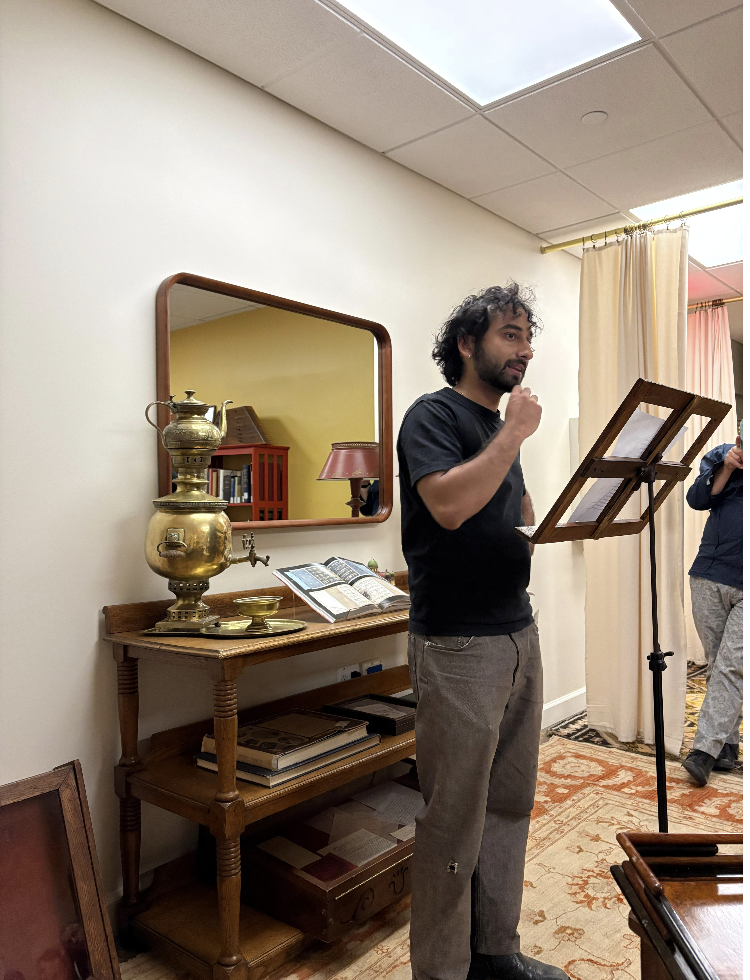
“In all civilizations—even those without a writing system—many people feel the need to express themselves in verse. Whether renowned or obscure, they yield to that impulse. They produce poetry addressed to themselves, their fellow beings, or the universe. This poetry may be robust or anemic, eternal or ephemeral. Poetry certainly predates prose.”
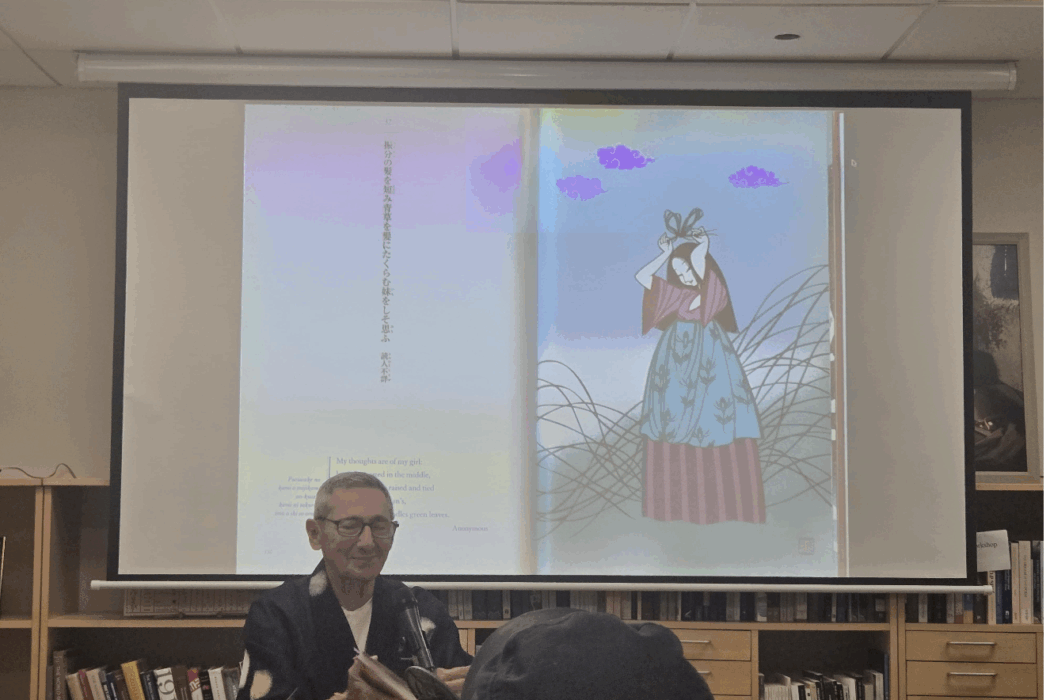
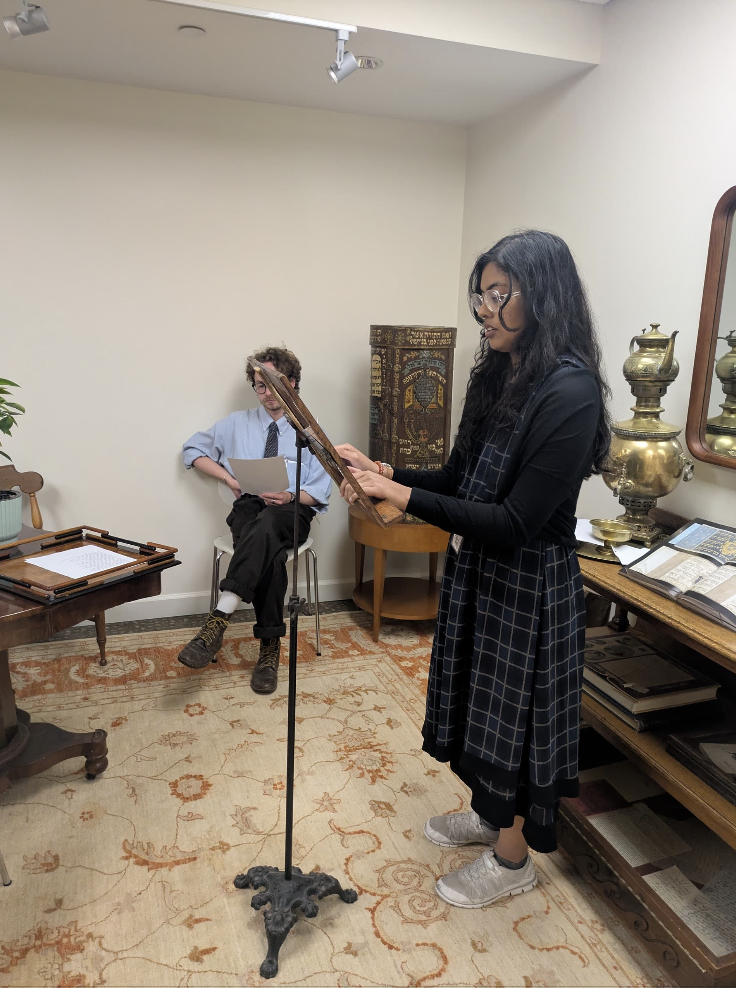
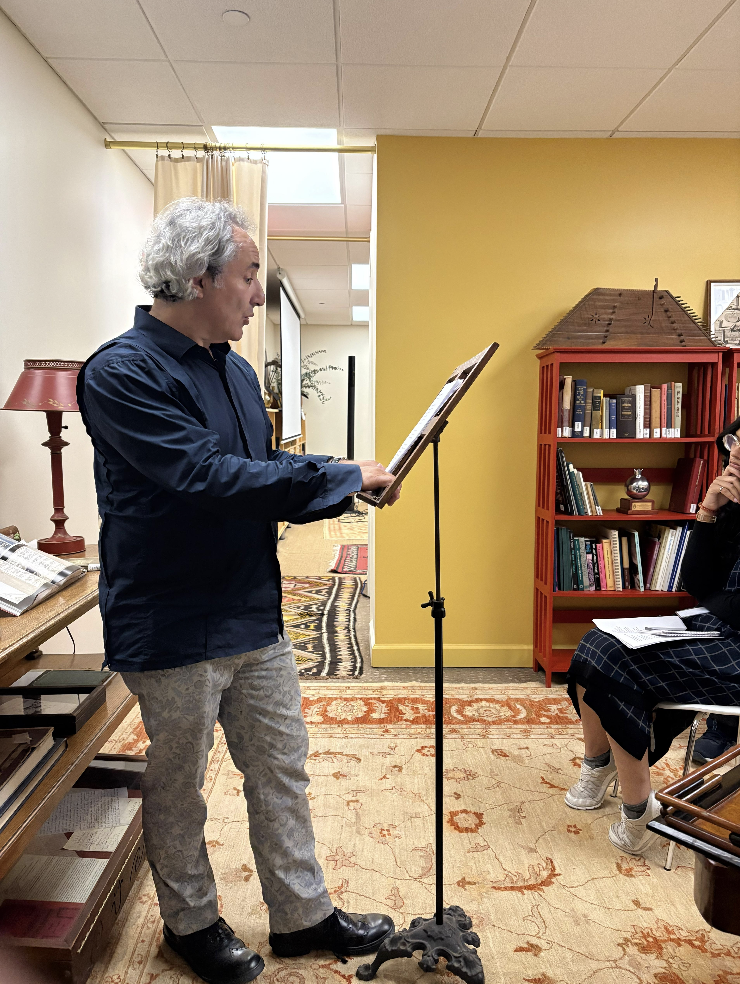
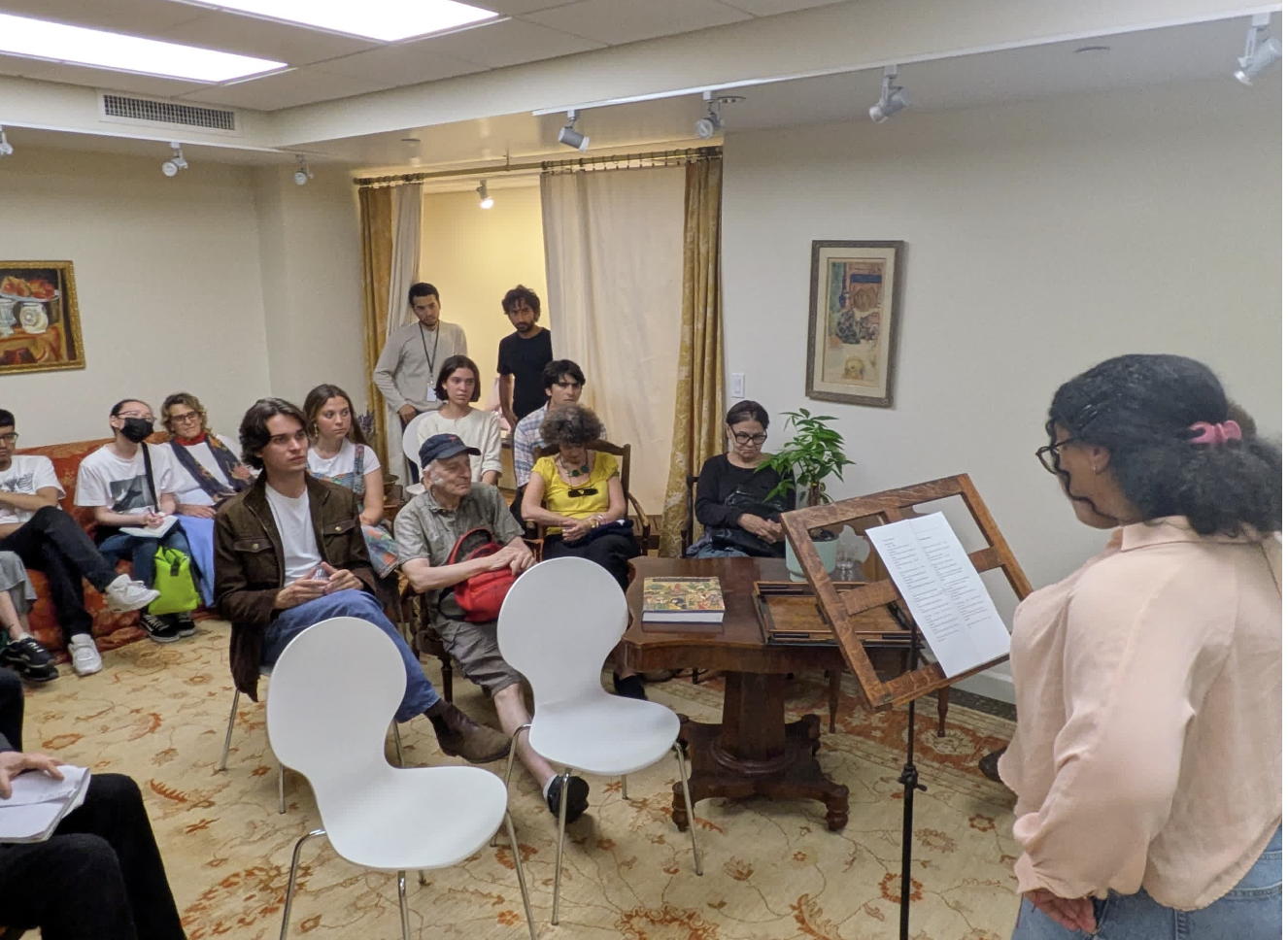
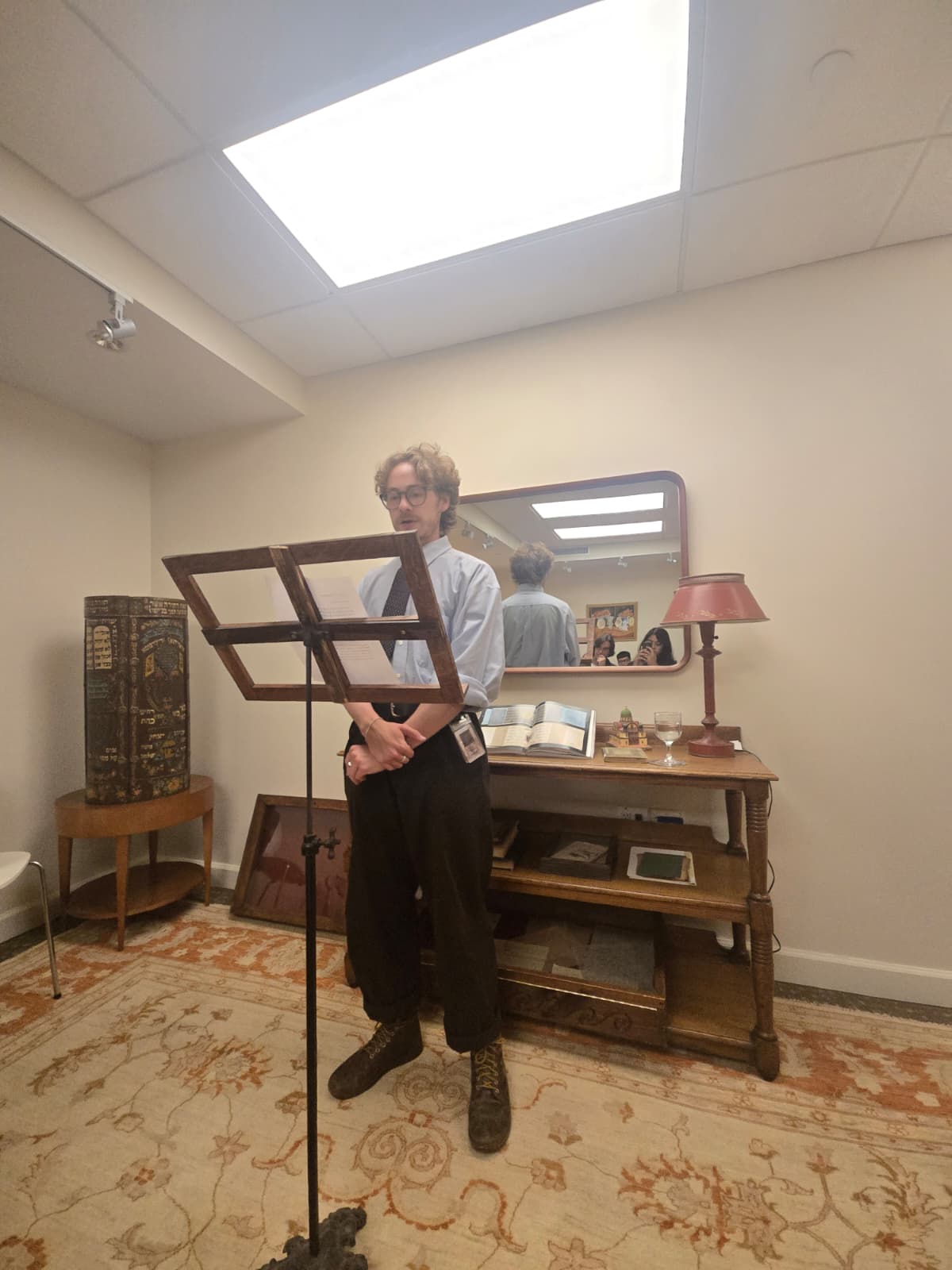
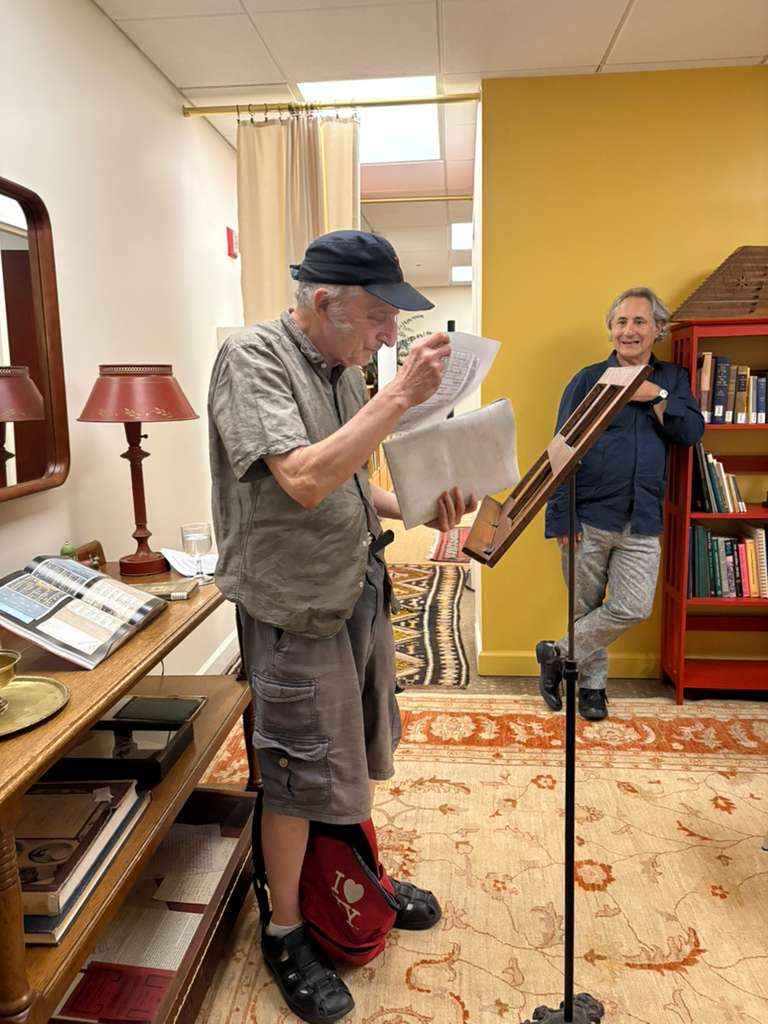
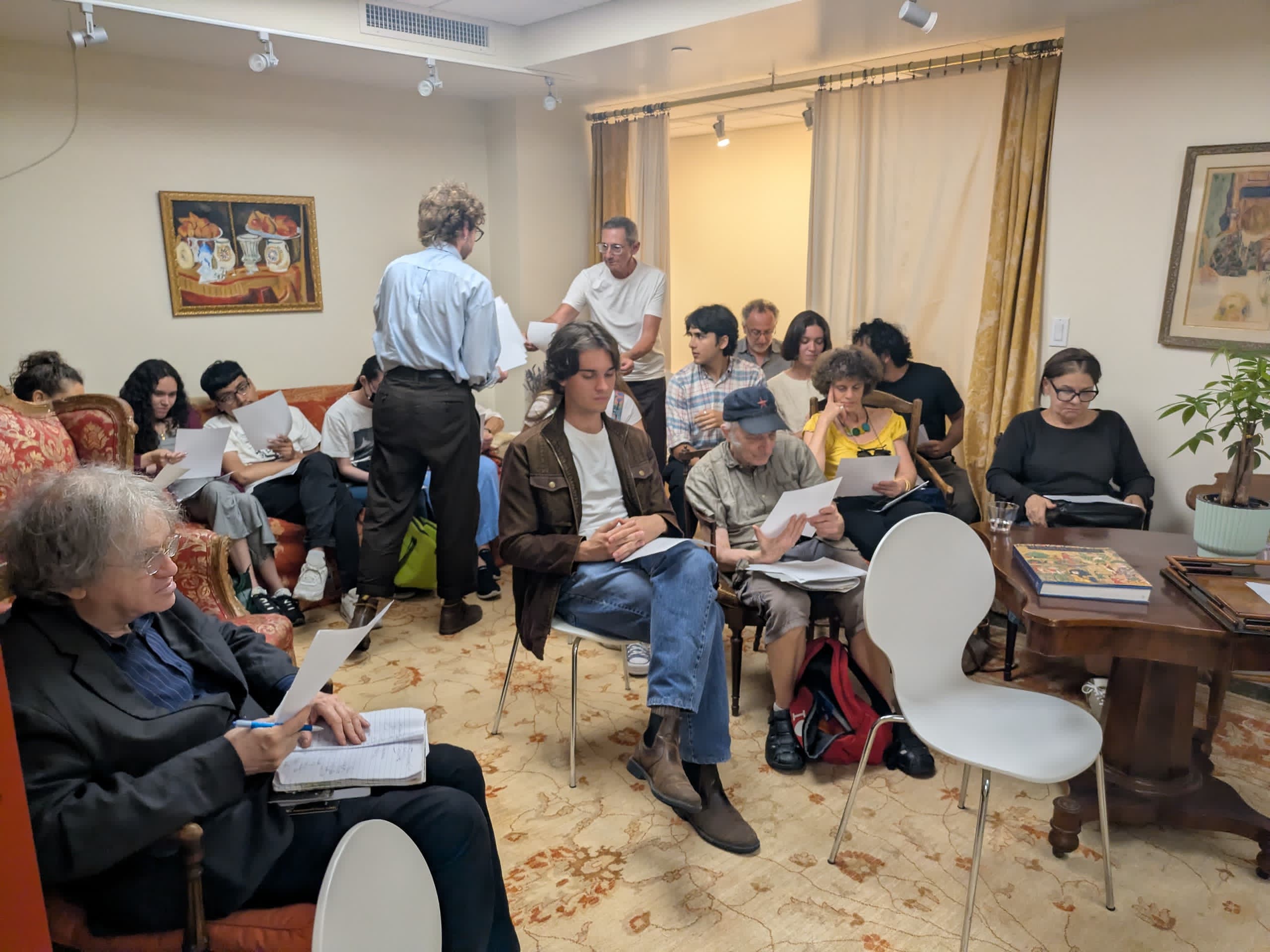
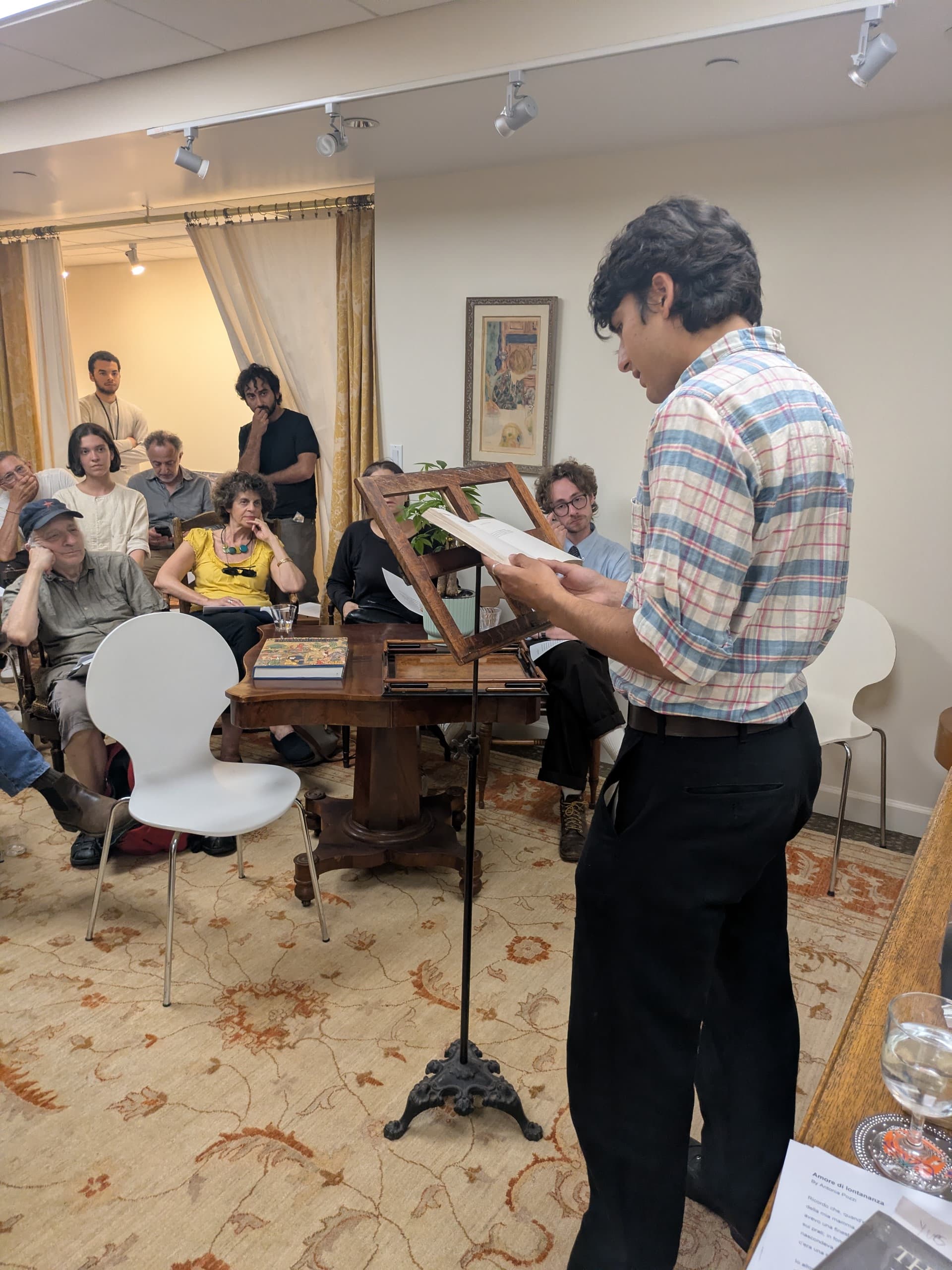
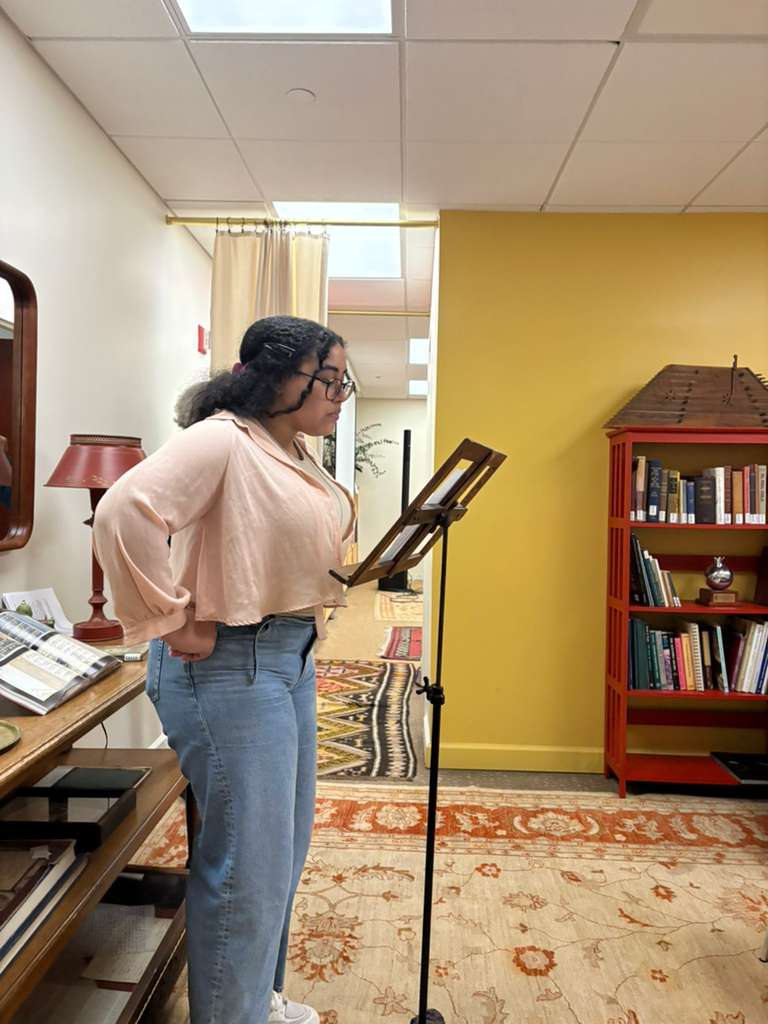
We will begin with Yves Seban reading short Japanese poems. Some of you remember his riveting reading from Joyce’s Finnegans Wake in Italian. Italian and Japanese are just two of the many languages Yves performs in. We need the large screen in this room to follow the translations. Then we will move to a more intimate space behind that curtain for the rest of the program. This will include readings in Urdu, Bengali, Spanish, Hebrew, and Italian by myself and some of the remarkable interns completing their semester here: Faiz Azfar, Genesis Espinal, Naila Hassan, and Quinn Kinsella.
I would like to dedicate this event to the Italian historian Carlo Ginzburg, who passed away two days ago. One of the truly great and original minds in reshaping the study of history, Ginzburg was a seminal figure and constant inspiration for our work at Centro Primo Levi.
Thank you, and enjoy the poems!